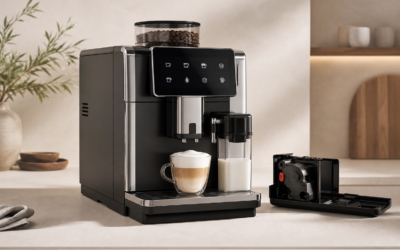
If your espresso machine runs but produces little coffee, or its pressure indicator stays low, start with water flow and setup before assuming a part has failed. The same symptom can come from an empty tank, an obstructed path, a clogged filter, or resistance from the coffee puck.
This guide explains why does my espresso machine have no pressure, how to check common causes in order, and when to seek service. For related brewing advice, see our guide to making espresso with pre-ground coffee.

Pros
- Compact 5.2-inch wide stainless housing
- PID temperature control with low-pressure pre-infusion
- Convenient dedicated Americano preset cycle
- Generous 41oz removable water tank
Cons
- Included plastic scoop tamper lacks tamping leverage
- Single boiler requires wait time between brewing and steaming
- Lightweight base may shift when securing portafilter
Specifications
| Color | Metallic |
|---|---|
| Size | Outline Dimension: 12.0×5.2×11.9in |
| Dimensions | 12 x 5.2 x 11.9 Inches |
| Product Group | Kitchen |
| Binding | Kitchen |
Verify the current product variation before purchase; specifications may change.
Detailed Review
Key features from the product listing:
- Dual NTC sensors and PID regulation stabilize brew temperature within 2 degrees Celsius
- Low-pressure pre-infusion gently soaks coffee puck to minimize channeling
- Ultra-narrow 5.2-inch footprint fits crowded counters and small apartments
- Dedicated Americano button brews 350 ml servings automatically
- Manual steam wand froths milk for lattes and cappuccinos
- Removable 41-ounce water reservoir simplifies refilling and sink cleanup
Best For / Avoid If
Best for buyers prioritizing
- Compact 5.2-inch wide stainless housing
- PID temperature control with low-pressure pre-infusion
- Convenient dedicated Americano preset cycle
Consider another option if
- Included plastic scoop tamper lacks tamping leverage
- Single boiler requires wait time between brewing and steaming
- Lightweight base may shift when securing portafilter
First, distinguish low pressure from slow or absent coffee flow. A gauge or pressure claim does not by itself confirm that water is moving properly through the brew path or that the coffee is extracting well.
1. Check the water tank and machine priming
Make sure the reservoir contains water and sits firmly in its position. Some machines draw water only when the tank valve engages correctly, so a tank that looks seated may still need repositioning.
If the machine is new, has been stored, or has run dry, air may be in the water circuit. Follow the manufacturer’s priming instructions; do not keep running the pump for long periods if water is not moving.
2. Run water without coffee to check flow
Remove the portafilter and brew basket, then run a brief water cycle as directed by the manual. A steady flow suggests the machine can deliver water, while a weak or absent flow points toward the tank connection, a blockage, or a pump or valve issue.
Let the machine cool before inspecting removable parts, and avoid opening its casing. Electrical components and hot water create burn and shock risks; internal repairs belong with qualified service personnel.
3. Clean the basket, shower screen, and brew path
Fine coffee particles and oils can obstruct small openings over time. Remove and clean only the parts your manual identifies as removable, checking the filter basket holes and portafilter spouts for visible residue.
Use the cleaning method and descaling interval specified by the manufacturer. Descaling removes mineral buildup in water passages, but it is not a substitute for clearing coffee residue, and an unsuitable cleaner can damage components.
4. Adjust grind, dose, and tamp
If water flows without the portafilter but barely moves with coffee in place, the puck may offer too much resistance. A grind that is too fine, an overfilled basket, or unusually firm tamping can slow extraction enough to resemble a pressure fault.
Change one variable at a time: use a slightly coarser grind or a smaller dose, then observe whether flow improves. Espresso baskets differ, so follow the machine’s basket guidance rather than forcing a fixed dose into every setup.
5. Check the portafilter and basket fit
Confirm that the basket is seated correctly and that the portafilter locks into place without being forced. A mismatched or damaged basket, blocked spout, or worn seal can cause leaks or disrupt brewing, though the exact signs vary by design.
Inspect seals only as your manual permits, and replace parts with compatible components. If water escapes around the portafilter or the handle will not lock normally, stop brewing until you identify the cause.
6. Consider a pump, valve, or electrical fault
If the tank is full, the machine is primed, removable components are clean, and water still will not flow, an internal fault becomes more plausible. Unusual pump noise, persistent leaks, or a machine that will not power normally are reasons to stop and consult the manual or manufacturer support.
Do not dismantle a powered machine or attempt electrical repairs without appropriate qualifications. Check warranty terms before arranging service, since unauthorized repairs may affect coverage.
What the Arecovas pressure specification means
Arecovas describes its espresso machine as having a 20-bar pressure system and lists low-pressure pre-infusion. Those are manufacturer claims about the machine’s system; they do not mean every shot should brew at 20 bar or that a pressure label rules out a flow problem.
The manufacturer also lists single- and double-shot buttons, a removable water tank, and included filter baskets. Buyers should check the manual for operating and cleaning instructions, since the available specifications do not establish how to diagnose every fault.
Why you should trust us
Our guidance separates common user-checkable causes from faults that require service, and explains how each symptom can narrow the possibilities. Product details are attributed to the manufacturer, while troubleshooting advice is framed conservatively because machine designs and manuals differ.
We do not treat a stated pressure rating as proof of extraction quality or a guarantee against malfunction. For model-specific steps, your machine’s manual and manufacturer support take priority over general advice.
Final thoughts
The Arecovas Espresso Machine, 20 Bar Pressure may suit someone seeking a compact machine with one- and two-cup options, an Americano button, and a steam wand. Its listed pre-infusion and removable tank may be useful features, but the manufacturer’s pressure figure alone cannot diagnose performance or establish long-term reliability.
For a value-oriented choice among the product covered here, it is the only option to consider, not a comparison-based winner. Skip it if you need documented service details or specifications beyond those the manufacturer lists, and review the manual and warranty terms before deciding.
If flow remains poor after basic checks, avoid repeated pump cycles and contact support. You can also browse the espresso machine category or learn how grind and beverage volume affect ristretto, espresso, and lungo.
FAQs
Why does my espresso machine have no pressure but still make noise?
A pump may make noise without delivering water if the tank is empty, not seated correctly, or the circuit needs priming. If the reservoir and priming steps check out, stop repeated cycles and consult the manual or support.
Can coffee that is ground too fine stop espresso flow?
Yes. Very fine coffee can create strong resistance in the basket, especially when combined with an overfilled dose, so try a slightly coarser grind or a smaller amount.
Should I run the machine without the portafilter?
A brief water-only cycle can help distinguish a coffee-puck problem from a water-delivery issue. Follow the manual, keep hands clear of hot water, and stop if the machine is not moving water normally.
Does a 20-bar espresso machine brew at 20 bar?
A stated system rating is not necessarily the pressure at the coffee puck during extraction. Treat the number as a manufacturer specification, not a guarantee that a particular shot will have a particular pressure or taste.
Can limescale cause low pressure in an espresso machine?
Mineral buildup can restrict water passages, depending on water hardness and machine design. Descale only as directed by the manufacturer, using a compatible product and procedure.
How do I know if the espresso machine pump is broken?
No single sound or symptom confirms a failed pump across all models. If priming, tank placement, and cleaning do not restore flow, contact the manufacturer or a qualified repair service.
Why does water leak around the portafilter?
A poorly seated basket, damaged seal, or incompatible part may contribute, but designs vary. Stop using the machine if the handle will not lock securely or leakage is persistent, then check its manual.
When should I stop troubleshooting an espresso machine with no pressure?
Stop if you notice electrical problems, persistent leaking, abnormal operation, or no water flow after safe basic checks. For upkeep advice, see our practical guide to dialing in decaf espresso, and follow your machine’s cleaning schedule.