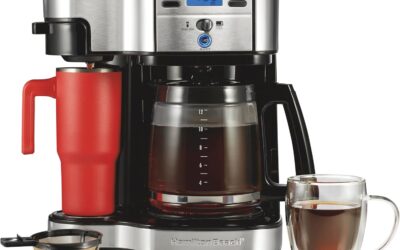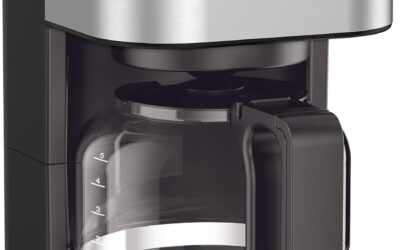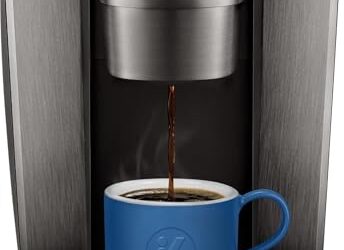

A coffee maker with grinder suits busy households that want freshly ground beans without managing multiple appliances each morning. A separate grinder better serves drinkers who value grind control, repair flexibility, and the freedom to change brewing methods.
Our coffee maker with grinder vs separate grinder comparison examines 3 products available in 2026. You can also browse our coffee grinder guides when planning a modular setup.

Pros
- Built-in burr grinder for fresh grounds
- Touchscreen is simple to operate
- Adjustable 4-10 cup brew volume
- 24-hour programmable timer
- 4-hour keep-warm plate
Cons
- No carafe thermal insulation
- Heating plate may overheat small batches
- Grinder settings not specified
Specifications
| Color | Matte Black |
|---|---|
| Size | 10.7"D x 7.9"W x 17.8"H |
| Dimensions | 10.7 x 7.9 x 17.8 inches |
| Weight | 4.7 pounds |
| Product Group | Kitchen |
Verify the current product variation before purchase; specifications may change.
Detailed Review
What stands out in the currently available product data:
- Built-in conical burr grinder grinds beans just before brewing for peak freshness
- Large responsive touchscreen controls brewing settings, strength, and timer with one tap
- Adjustable brew volume from 4 to 10 cups, ideal for solo cups or entertaining
- Programmable 24-hour timer lets you set the night before for wake-up coffee
- 4-hour adjustable keep-warm plate holds coffee at serving temperature for extended sessions
- Permanent filter included eliminates paper waste and saves ongoing costs
Best For / Avoid If
Best for buyers prioritizing
- Built-in burr grinder for fresh grounds
- Touchscreen is simple to operate
- Adjustable 4-10 cup brew volume
Consider another option if
- No carafe thermal insulation
- Heating plate may overheat small batches
- Grinder settings not specified

Pros
- Freshly ground coffee from whole beans
- Customizable grind and strength settings
- Reusable filter included, no paper waste
- Pre-brew tech enhances flavor
- Auto keep-warm for 2 hours
Cons
- Not for oily dark-roast beans
- Actual brew volume less than tank capacity
- No built-in milk frother or espresso
Specifications
| Color | Black |
|---|---|
| Size | 12.4"D x 8.4"W x 16.9"H |
| Dimensions | 12.36 x 8.37 x 16.93 inches |
| Product Group | Kitchen |
Verify the current product variation before purchase; specifications may change.
Detailed Review
What stands out in the currently available product data:
- Built-in burr grinder with 8 grind settings for fresh coffee
- Programmable timer and 2-hour auto keep-warm function
- Reusable permanent filter reduces waste and saves money
- Pre-brew technology saturates grounds for better extraction
- Adjustable brew strength with 3 levels and strong mode
- 1.5L water tank brews 2 to 10 cups, adjustable ratio
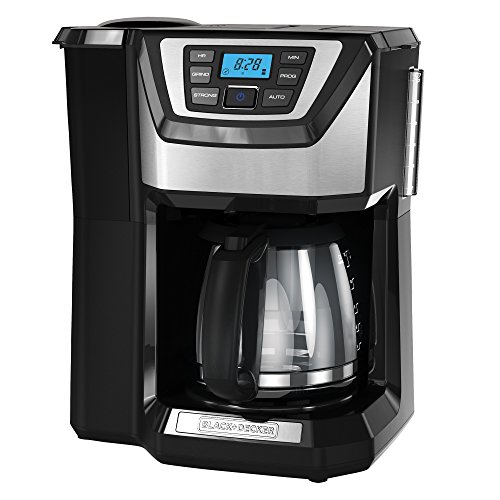
Pros
- Built-in grinder for fresh beans
- Permanent filter, no paper waste
- Easy to clean dishwasher-safe parts
- Sneak-a-Cup for early pours
- Programmable auto brew
Cons
- Plastic construction may feel less durable
- No bloom or rain shower brew head
- Brewing may slow over time
Specifications
| Color | Black/Stainless Steel |
|---|---|
| Size | 12-Cup |
| Dimensions | 10 x 13.5 x 15.5 inches |
| Weight | 9.5 pounds |
| Product Group | BISS |
| Binding | Kitchen |
Verify the current product variation before purchase; specifications may change.
Detailed Review
What stands out in the currently available product data:
- Brews from whole beans or pre-ground for flexibility
- QuickTouch panel with brew strength and auto brew settings
- Built-in grinder for fresh coffee every time
- Permanent filter saves money and reduces waste
- Sneak-a-Cup feature lets you pour before brewing finishes
- Dishwasher-safe grinder and filter basket for easy cleanup
Best For / Avoid If
Best for buyers prioritizing
- Built-in grinder for fresh beans
- Permanent filter, no paper waste
- Easy to clean dishwasher-safe parts
Consider another option if
- Plastic construction may feel less durable
- No bloom or rain shower brew head
- Brewing may slow over time
Convenience and Morning Workflow
An integrated machine can grind beans and begin brewing through one programmed workflow, reducing measuring, transferring, and cleanup steps. This arrangement is particularly useful when several people share a carafe and prioritize consistent routines over frequent experimentation.
A separate grinder requires moving grounds into the filter basket, but that extra step provides useful control over dosing. Choose integration for automated mornings, or separate equipment when adjusting each batch feels worthwhile rather than inconvenient.
Grind Adjustment and Extraction Control
Grind size controls how quickly water extracts flavor from coffee, with finer particles generally increasing extraction and resistance. The Gevi Grind-And-Brew model documents eight grind settings and three strength levels, providing more adjustment than basic integrated systems.
A dedicated burr grinder usually offers a broader path for matching pour-over, immersion, and drip brewing requirements. If coffee tastes sour or thin, finer grinding may help; bitterness or dryness can indicate grinding too finely.
Capacity and Small-Batch Performance
Carafe capacity describes maximum volume, but minimum batch size often matters more for one-person households. One Gevi model supports four through ten cups, while the other documents settings from two through ten cups.
Remember that a coffee maker cup is commonly smaller than a standard kitchen measuring cup or travel mug. Compare the reservoir markings with your usual serving volume, then select a machine whose minimum batch avoids unnecessary waste.
| Buying factor | Integrated grinder | Separate grinder |
|---|---|---|
| Daily steps | Fewer transfers and controls | Separate grinding and dosing |
| Grind flexibility | Limited to built-in settings | Depends on chosen grinder |
| Upgrades | Usually replace the combined unit | Replace either appliance independently |
| Counter layout | One tall footprint | Two shorter or movable footprints |
| Cleaning | Connected coffee and grinder pathways | Components can be cleaned separately |
Counter Space and Cabinet Clearance
Integrated machines occupy one footprint, but bean hoppers and water reservoirs can make them unusually tall or deep. The supplied Gevi dimensions approach seventeen or eighteen inches tall, so overhead clearance deserves careful measurement before purchasing.
Leave additional room above the stated machine height for opening lids and pouring beans or water comfortably. Separate equipment consumes more total surface area, although a compact grinder can move into storage between brewing sessions.
Cleaning and Coffee Oil Management
Built-in grinders create a connected pathway where grounds, chaff, and coffee oils can collect over repeated brewing cycles. Removable hoppers, accessible chutes, and washable filter baskets make routine care easier, but supplied information does not confirm every removable component.
Never pour water into a burr chamber unless the manufacturer specifically permits wet cleaning in its manual. Clean the carafe separately, and follow an appropriate coffee maker descaling schedule based on water hardness and usage.
Repairability and Long-Term Ownership
An integrated machine concentrates brewing and grinding functions in one housing, making failure of either system more disruptive. Separate appliances let you replace or upgrade one component while continuing to use the other whenever compatibility permits.
Before buying, check warranty coverage, replacement carafe availability, filter compatibility, and access to cleaning instructions or spare parts. A lower initial cost can lose its advantage if one unavailable component sidelines the entire brewing system.
Carafe Style and Holding Time
The listed Gevi machines use warming functions, with documented holding periods differing between models. Extended heat is convenient for staggered schedules, although prolonged warming can gradually flatten aromas and intensify cooked flavors.
A glass carafe lets you see the remaining coffee but depends on a hot plate for continued warmth. Compare this workflow with our thermal carafe versus glass carafe guide if holding quality outweighs visibility.
Why You Should Trust Us
We based this comparison on supplied product specifications, documented controls, stated dimensions, capacity ranges, and maintenance implications. We did not physically test these machines, so we avoid claiming measured temperatures, noise levels, flavor results, or durability.
Our recommendations prioritize differences affecting everyday ownership, including workflow, extraction control, cabinet clearance, cleaning access, and replacement flexibility. Where listing information appears inconsistent, we flag uncertainty instead of treating marketing language as verified performance evidence.
Final Thoughts
Our best overall integrated choice is the Gevi 10-Cup Grind-And-Brew Drip Coffee Maker because its documented eight grind settings and smaller minimum batch provide useful flexibility. Choose it when you want automation without giving up every adjustment that influences extraction.
The Gevi 10-Cup Grind & Brew Drip Coffee Maker is our value-oriented alternative for larger routine batches and extended warming. Its touch controls and adjustable holding period suit households that prioritize scheduling and serving convenience over the smallest possible batch.
The BLACK+DECKER Farberware 12-Cup Electric Coffee is the specific-use option only after confirming the exact model with the seller. Supplied information conflicts between a percolator title and grind-and-brew description, preventing a confident feature comparison until those details are verified.
Choose neither integrated model if you switch among drip, pour-over, and other methods or expect gradual equipment upgrades. A dedicated grinder from the Coffee Grinders category offers greater independence, while our affordable coffee maker guide covers standalone brewers.
Frequently Asked Questions
Which option wins coffee maker with grinder vs separate grinder in 2026?
An integrated grinder wins for automated drip coffee and fewer morning steps, especially when one grind range meets your needs. Separate equipment wins for broader adjustment, easier upgrades, and independent replacement when one appliance eventually fails.
Does a built-in grinder make better coffee?
A built-in grinder can improve freshness by grinding immediately before brewing, but integration alone does not guarantee better extraction. Burr quality, particle consistency, coffee dose, water temperature, and bean freshness all influence the resulting cup.
Are burr grinders better than blade grinders for drip coffee?
Burr grinders generally provide more consistent particle sizes and repeatable adjustment than blade grinders, supporting more even extraction. Blade grinders chop unpredictably, producing fines and larger fragments that may extract at different rates.
Can I use pre-ground coffee in a grind-and-brew machine?
Many grind-and-brew machines provide a pre-ground or grinder-bypass setting, but this capability varies between models. Confirm the correct control sequence in the manufacturer manual before placing grounds into any compartment.
How often should an integrated coffee grinder be cleaned?
Cleaning frequency depends on bean oiliness, brewing volume, and the manufacturer instructions supplied with your machine. Brush accessible dry areas regularly, empty retained grounds, and avoid introducing moisture near burrs or electrical components.
Will oily beans clog a coffee maker with grinder?
Very oily beans can leave residue in hoppers and grind pathways, potentially increasing retention or obstructing movement. Follow the manufacturer guidance on suitable beans, and never use rice as a cleaner unless explicitly approved.
How much cabinet clearance does a grind-and-brew machine need?
Measure the appliance height plus the space required to open its hopper and reservoir lids completely. Checking only the listed dimensions can leave insufficient room for refilling or removing components beneath upper cabinets.
Is a permanent filter better than paper filters?
Permanent filters allow more oils and fine particles into the carafe, creating a fuller body with additional sediment. Paper filters usually produce a cleaner cup and simpler disposal, although they add an ongoing consumable requirement.
How do I clean stains from a glass coffee carafe?
Use methods compatible with the carafe material and manufacturer instructions, avoiding abrasive tools that could scratch glass surfaces. Our guide explains how to remove coffee stains from a carafe safely using practical cleaning steps.