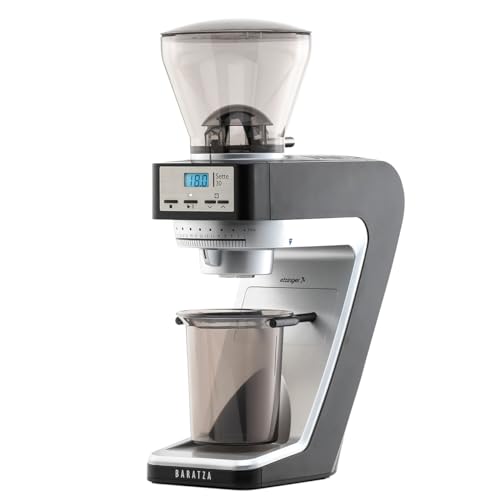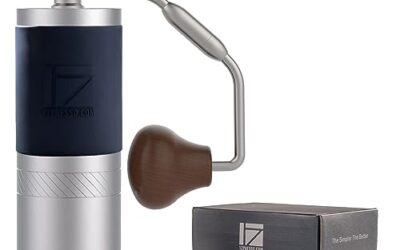

Choosing between a stepped vs stepless coffee grinder depends on how often you change brew methods, adjust espresso, and value repeatable settings. Stepped grinders use defined clicks, while stepless designs offer continuous adjustment across their range.
This guide explains the practical difference for home coffee use, including espresso dialing, pour-over repeatability, cleaning, workflow, and long-term value.
For broader grinder maintenance guidance, see our Coffee Grinders category. Use this framework alongside each grinder’s official adjustment range, burr information, warranty, and operating instructions.
How to Choose a stepped vs stepless coffee grinder
Adjustment precision
Stepped grinders divide adjustment into preset positions. Each click creates a repeatable reference, which makes it easier to return to a familiar setting after changing beans or cleaning.
Stepless grinders remove those preset stops and allow smaller changes between coarse and fine settings. That flexibility can help espresso users tune flow, but tiny adjustments become harder to record without careful notes.
Espresso dialing and extraction control
Espresso often responds to small grind changes because water passes through a compact coffee puck under pressure. A stepless collar can provide fine control when a stepped setting leaves extraction slightly too fast or slow.
Stepped adjustment still works for espresso when click spacing is suitably fine and the grinder holds its setting securely. A defined scale also helps households reproduce a recipe, especially when several people share one grinder.
Pour-over and batch-brew usability
Pour-over brewing usually tolerates broader grind changes than espresso, although grind size still affects flow and contact time. Stepped controls make routine adjustments straightforward when moving between familiar recipes.
Stepless designs can work well for pour-over, but their extra control may add little value if your recipes use broad settings. Choose based on your need for repeatability rather than adjustment freedom alone.
Switching between brew methods
People who alternate between espresso, drip, French press, and pour-over should consider how easily they can find previous settings. Stepped grinders provide numbered or position-based references, although the ideal scale varies by model.
Stepless grinders may require more active record keeping when switching methods. Marked collars, digital notes, or a simple brew log can reduce wasted coffee and shorten the return to a known setting.
Retention, cleaning, and calibration
Adjustment style does not determine grind retention, burr alignment, cleaning access, or calibration quality. Those factors depend on grinder construction and maintenance instructions, so inspect the published documentation before choosing.
Cleaning can change the grinder’s reference position if burrs or adjustment parts move during disassembly. Record your setting before maintenance, follow the manual, and avoid forcing a collar against its stop.
For related maintenance problems, our guide to coffee grinder squealing causes and fixes covers symptoms that may require inspection rather than adjustment changes.
Workflow, noise, and counter space
A stepped grinder can feel faster during daily use because each adjustment has a clear endpoint. This matters when several household members prepare coffee and need a common setting language.
A stepless grinder may suit dedicated espresso routines where adjustment happens gradually during dialing. Published noise, footprint, hopper, and dosing details matter more than adjustment style when counter space or household disruption is the main concern.
Repeatability, documentation, and ownership value
Repeatability comes from more than numbered clicks. Burr alignment, mechanical stability, consistent dosing, bean age, roast level, humidity, and brewing equipment can all change the result.
Before purchase, compare adjustment diagrams, burr specifications, warranty terms, replacement-part access, and cleaning requirements. A grinder with fewer adjustment options may offer better daily value if it matches your main brewing method.
| Decision factor | Stepped design | Stepless design |
|---|---|---|
| Setting repeatability | Clear positions support routine recipes | Requires notes or visual references |
| Fine espresso tuning | Depends on click spacing | Usually offers more adjustment freedom |
| Switching methods | Often simpler to reference | May require more careful tracking |
| Maintenance impact | Adjustment style does not prove retention or alignment | Adjustment style does not prove retention or alignment |
Why You Should Trust Us
We assess grinder choices by separating documented specifications from editorial interpretation. That means adjustment type supports a workflow conclusion, but it does not prove grind quality, durability, noise, or cup results without suitable evidence.
Confirm each candidate’s official manual, burr system, adjustment range, warranty, cleaning process, and compatibility before purchase.
Final Thoughts
The overall choice is stepped for many households that prioritize repeatable recipes, easy method changes, and shared settings. Stepless is the better fit for espresso-focused users who value continuous adjustment and accept more careful record keeping.
This guide explains the two adjustment styles rather than ranking specific grinders. When you compare specific grinders, look at burr details, adjustment scale, maintenance access, warranty, and operating workflow.
Readers considering grinder ownership should also review our guide to grinding oily coffee beans in a burr grinder. For replacement or removable-hopper concerns, see the removable hopper grinder guide.
FAQs
What is the difference between stepped and stepless grinders?
Stepped grinders use preset clicks. Stepless grinders use continuous adjustment, allowing smaller changes but requiring more careful reference tracking.
Is a stepless grinder better for espresso?
Stepless adjustment can help espresso users make fine changes between grind settings. It is not automatically better because burr alignment, stability, and adjustment range also matter.
Is a stepped grinder easier for beginners?
Often, yes. Defined positions make settings easier to record and repeat, but beginners still need to adjust for bean age, dose, and brewing method.
Can one grinder handle espresso and pour-over?
Many grinders can cover multiple methods, but suitability depends on published grind range, adjustment control, retention, and the manufacturer’s intended use.
Does stepped vs stepless coffee grinder affect flavor?
Adjustment affects particle size, which influences extraction. Flavor also depends on burr design, alignment, coffee freshness, water, dose, and brewing technique.
How should I record a stepless grinder setting?
Record collar position using a visible reference, written notes, or a photo. Save the coffee, dose, brew method, and result with each setting.
What should I check before buying a grinder in 2026?
Check official specifications for burrs, adjustment range, retention guidance, cleaning access, warranty, replacement parts, and compatibility with your main brewer.
Where can I find more coffee grinder maintenance help?
Our coffee grinder guides cover cleaning, noise, stuck components, and workflow problems using practical troubleshooting steps.