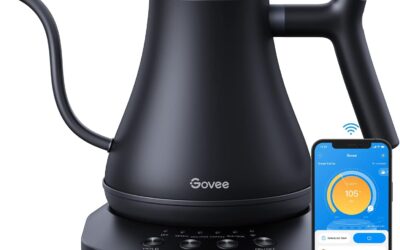
The ideal water temperature for pour over coffee depends on the coffee, roast, and brewing method, but a practical starting point is water just off the boil. A kettle can help you reach or maintain that temperature and pour steadily, making it easier to repeat a recipe.
In November 2026, this guide compares 2 kettles and explains how to adjust heat without treating one number as a universal rule. If you are still choosing a brewer, see our guide to pour over drippers for beginners.

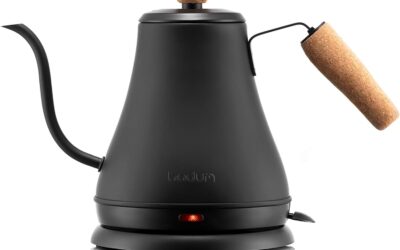
Pros
- Precise gooseneck spout for controlled pouring
- Comfortable non-slip cork handle
- Heats water quickly
- Automatic shut-off for safety
- Lightweight and compact
Cons
- May dribble from base when pouring
- Thin stainless steel prone to dents
- No temperature control for precise brewing
Specifications
| Color | Matte Black |
|---|---|
| Size | 27 oz |
| Dimensions | 8.26 x 11.79 x 6.29 inches |
| Weight | 2.1 Pounds |
| Product Group | Kitchen |
| Binding | Kitchen |
Verify the current product variation before purchase; specifications may change.
Detailed Review
Key features from the product listing:
- Gooseneck spout gives you precise flow control for even pour-over extraction
- Natural cork handle stays comfortable and non-slip while pouring
- 1000-watt base heats water quickly for your morning brew
- Automatic shut-off adds peace of mind after boiling
- Cordless kettle lifts off the base for easy pouring
- Compact 27-ounce capacity suits single-serve and small-batch brewing
Best For / Avoid If
Best for buyers prioritizing
- Precise gooseneck spout for controlled pouring
- Comfortable non-slip cork handle
- Heats water quickly
Consider another option if
- May dribble from base when pouring
- Thin stainless steel prone to dents
- No temperature control for precise brewing

Pros
- Single-degree temperature adjustment
- Six-hour hold function below 205 F
- Food-grade 304 stainless steel interior
- Fast five-minute boil from 1200W base
- Precise slow-pour flow rate
Cons
- Hold function disabled above 204 F
- Small 0.9-liter capacity limits multi-cup batches
- Lacks preset temperature buttons
Specifications
| Color | Black |
|---|---|
| Size | 1 Quarts |
| Dimensions | 10.7 x 6.8 x 8.2 inches |
| Product Group | Kitchen |
Verify the current product variation before purchase; specifications may change.
Detailed Review
Key features from the product listing:
- Dial in exact brew recipes with 1-degree Fahrenheit adjustments from 100 to 212 degrees
- Control pour rate over coffee beds with narrow 8mm gooseneck spout
- Boil full 0.9-liter capacity in five minutes via 1200W heating base
- Maintain brew temperature up to six hours below 205 degrees Fahrenheit
- Prevent chemical leaching using all-304 stainless steel interior chamber
- Insulate grip against heat using natural wood handle and lid accents
Best For / Avoid If
Best for buyers prioritizing
- Single-degree temperature adjustment
- Six-hour hold function below 205 F
- Food-grade 304 stainless steel interior
Consider another option if
- Hold function disabled above 204 F
- Small 0.9-liter capacity limits multi-cup batches
- Lacks preset temperature buttons
How to Choose the Ideal Water Temperature for Pour Over Coffee
Start with a useful temperature range
A common starting range for pour over is about 195°F to 205°F. That is a guideline, not a guarantee of a better cup: grind size, pouring, coffee freshness, and contact time also affect extraction.
For a simple routine, bring water to a boil, then let it settle briefly before pouring. At elevations where water boils below 212°F, boiling alone may not reach the same temperature as it does at sea level.
Adjust for roast and flavor
Lighter roasts can be less soluble, so starting toward the warmer end of the range may help extract more sweetness and clarity. If the cup tastes sharply sour or thin, temperature could be one variable to adjust, alongside grind and brew time.
Darker roasts generally dissolve more readily and may taste harsh or bitter when extraction is pushed too far. Try a slightly lower temperature if bitterness persists, but change one variable at a time so you can tell what helped.
Know what temperature changes in the cup
Extraction is the process of dissolving coffee compounds into water. Warmer water tends to extract faster, while cooler water tends to extract more slowly, but neither automatically makes coffee balanced.
A sour, underdeveloped cup can also come from a coarse grind or short brew. A dry, bitter cup can reflect a very fine grind or prolonged contact, so temperature adjustments work best alongside careful attention to the whole recipe.
Decide whether temperature control matters
A standard electric kettle can be enough if you are comfortable boiling water and allowing it to cool briefly. A variable-temperature model is useful when you want to choose a repeatable setting, switch between coffee and tea, or avoid estimating cooldown.
The Narcissus kettle lists adjustment in 1°F increments and a keep-warm function, while the Bodum model emphasizes controlled pouring without listed temperature selection. Compare those conveniences with your actual routine before choosing.
Match the spout and capacity to your workflow
A gooseneck spout helps you direct a narrow stream over the coffee bed. This can make it easier to wet grounds evenly and control pouring pace, although it does not correct an inconsistent grind or an unsuitable recipe.
The Bodum capacity is 0.8 liter, and Narcissus lists 0.9 liter. Consider how much water your usual brew requires, including water for rinsing a paper filter, and avoid filling beyond the manufacturer’s marked limit.
Check safety, upkeep, and ownership details
Bodum lists automatic shutoff, while Narcissus lists automatic shutoff and boil-dry protection. Follow each manual, use the kettle on a stable, dry surface, and take care around hot water, steam, and the heated base.
Both products use stainless steel, but regular descaling may still be needed where tap water is hard. Follow the manufacturer’s cleaning instructions, keep electrical components dry, and check warranty terms and replacement-part availability before purchase.
For more kettle features and tradeoffs, compare our variable-temperature gooseneck kettle guide and electric gooseneck kettle overview.
Why You Should Trust Us
We assess these kettles using the listed features that matter to pour over: temperature adjustment, pouring control, capacity, shutoff functions, and upkeep. We distinguish manufacturer-described functions from practical interpretation, rather than presenting specifications as proof of a particular cup quality.
Temperature guidance here is a starting framework, not a promise that one setting suits every coffee. Your grinder, filter, brewer, water, and taste preferences all influence the result, so small recipe adjustments remain important.
Final Thoughts
For an overall pick focused on controlled pouring and straightforward operation, the Bodum 27oz Bistro Gooseneck Electric Water Kettle is a sensible fit. Bodum lists a cordless design, stainless steel construction, a cork handle, and automatic shutoff; its limitation is that temperature selection is not listed.
The Gooseneck Electric Kettle with Temperature Control is the better choice for a specific use: brewers who want an adjustable temperature and an extended keep-warm option. Narcissus lists 1°F adjustments, a 0.9-liter capacity, and keep-warm operation for up to six hours under stated conditions, but buyers should confirm the manual’s operating details and warranty terms.
For value, the Bodum offers the simpler feature set, while the Narcissus adds temperature control for a modestly more involved routine; value depends on whether you will use that control. Skip the Bodum if selecting an exact temperature is essential, and skip the Narcissus if you prefer a simpler kettle without extra settings.
FAQs
What is the ideal water temperature for pour over coffee?
About 195°F to 205°F is a practical starting range for many pour over recipes. Adjust within that range according to roast, grind, and flavor rather than assuming one temperature is right for every coffee.
Is boiling water too hot for pour over coffee?
Not necessarily, but freshly boiling water may be hotter than your preferred starting point, especially for darker roasts. Let it cool briefly or use a kettle with temperature control, then evaluate the cup.
How long should I wait after boiling water?
There is no single reliable wait time because kettle material, water volume, room conditions, and elevation affect cooling. A thermometer or adjustable kettle gives a clearer reference than relying on a fixed number of minutes.
Does hotter water make pour over coffee stronger?
Hotter water can extract coffee compounds more quickly, which may change perceived strength and balance. Strength also depends on the coffee-to-water ratio, so temperature alone does not determine how concentrated a brew tastes.
Should I use a lower temperature for dark roast?
A slightly lower temperature can be worth trying if dark-roast coffee tastes harsh or bitter. Keep grind size and pouring consistent during the adjustment so you can identify whether temperature made a difference.
Do I need a temperature-control kettle for pour over?
No. A regular kettle can work if you can estimate cooling and pour carefully, while temperature control helps repeat a chosen setting. A gooseneck spout supports flow control, but neither feature replaces a suitable grind and recipe.
Why does my pour over taste sour even at the right temperature?
Sourness can indicate under-extraction, but temperature is only one possible cause. Consider a finer grind, a longer brew, or more even pouring, changing one factor at a time.
How can I make pour over temperature more consistent?
Use the same kettle routine, water amount, and target temperature each time, and note changes to your recipe. Our pour over coffee maker guide can also help you compare brewer formats that suit your workflow.