
Single boiler vs dual boiler espresso machine comparisons focus on one core question: how should a machine heat and manage water for brewing espresso and steaming milk? A single-boiler machine uses one boiler for both jobs. A dual-boiler machine uses separate boilers, normally one for espresso brewing and one for steam.
This difference affects workflow, temperature control, recovery time, machine size, maintenance, and price. Boiler count does not automatically decide espresso quality. Grinder quality, coffee freshness, dose, grind size, distribution, tamping, water, and technique still matter. Boiler design mainly changes how easily a machine handles different tasks.
What is a single-boiler espresso machine?
A single-boiler espresso machine has one heated vessel that supplies water for brewing and steaming. Because espresso extraction and milk steaming need different temperatures, the machine must manage those tasks in sequence.
Brewing espresso generally uses water near the temperature range required for extraction. Steam requires much hotter water so the boiler can create strong steam pressure. On a basic single-boiler machine, the user brews first, waits while the boiler heats for steam, then steams milk. After steaming, the machine may need cooling or flushing before it can brew again.
Single-boiler workflow
- Fill and lock the portafilter.
- Extract espresso while the boiler sits at brewing temperature.
- Activate steam mode or wait for the machine to raise boiler temperature.
- Steam milk.
- Return the machine to brew temperature before making another espresso.
Some single-boiler machines use heat-exchanger or thermoblock systems rather than a traditional brew-and-steam sequence. Those designs can reduce waiting, but the term single boiler usually describes machines with one primary heated boiler serving both functions. Product specifications matter because heating architecture varies within this broad category.
What is a dual-boiler espresso machine?
A dual-boiler espresso machine has two separate boilers. One handles brew water. The other creates steam. Separate temperature controls let each boiler operate at a suitable temperature for its job.
This arrangement allows brewing espresso and steaming milk at the same time. A user can start extraction, texture milk, or prepare the next drink without switching one boiler between brew and steam temperatures. The result is a more continuous workflow, especially when preparing several milk drinks.
Why separate boilers matter
The brew boiler supports stable extraction temperature. The steam boiler supports steam pressure and milk texturing. Since one task does not require the shared boiler to change temperature for the other, the machine avoids much of the waiting found in a single-boiler workflow.
Dual boilers still differ in construction. Boiler size, insulation, heating element capacity, temperature controls, group design, pump behavior, and water delivery all affect performance. Two boilers create useful separation, but they do not guarantee better espresso without sound preparation and calibration.
Single boiler vs dual boiler: main differences
Brewing and steaming at the same time
Dual boilers support simultaneous brewing and steaming by design. This matters for lattes, cappuccinos, and other milk drinks made in batches. A single-boiler machine normally requires a temperature change between extraction and steaming, so the user waits between stages.
For one espresso or an occasional milk drink, that pause may have little practical impact. For multiple drinks, repeated boiler changes make the workflow slower and require more attention.
Temperature control
A dual-boiler machine separates brew temperature from steam temperature. This gives the user independent control and reduces conflict between extraction and steaming demands.
A single-boiler machine can still produce good espresso, particularly when it offers accurate temperature control and the user follows its operating routine. However, brew temperature and steam temperature cannot remain independently available in one shared boiler. The user must manage timing, heating, cooling, or flushing.
Recovery and drink volume
Dual boilers usually recover more conveniently during repeated brewing and steaming because separate heating systems handle separate loads. A single boiler may recover adequately for occasional use but require more pauses during a long drink-making session.
Recovery depends on boiler capacity, heating power, water supply, drink size, and machine programming. Boiler count alone does not predict exact recovery time.
Machine size, cost, and energy use
Two boilers add components, controls, plumbing, and heating hardware. Dual-boiler machines often cost more and occupy more counter space than comparable single-boiler machines. They may also draw more power while heating or maintaining steam temperature.
Single-boiler machines usually offer a simpler design and lower entry cost. Their smaller footprint can suit limited counters, offices with light use, or users who value a straightforward espresso routine.
Which machine fits different coffee routines?
Choose single boiler for occasional milk drinks
A single boiler often fits a user who mainly drinks straight espresso, Americanos, or a small number of milk drinks. The temperature-switching routine becomes less important when the machine makes one drink at a time.
This design also suits users who prefer lower cost, smaller equipment, and a simpler system. Waiting during the transition from brewing to steaming is the main trade-off.
Choose dual boiler for frequent milk drinks
A dual boiler makes more sense when milk drinks form a large part of the routine or several people use the machine consecutively. Simultaneous extraction and steaming reduce pauses and make drink production more predictable.
Independent temperature control can also appeal to users who adjust brew parameters for different coffees. The machine supports more flexible control, but the user still needs a capable grinder and consistent preparation.
Consider a dual boiler for entertaining
When serving guests, workflow can matter more than maximum espresso quality. A dual boiler reduces the need to wait between shots and milk steaming. This does not remove every bottleneck: grinding, dosing, tamping, portafilter cleaning, milk preparation, and cup service still take time.
Consider single boiler for limited space
A single-boiler machine may fit better in a compact kitchen. Measure counter depth, width, height, clearance for the water tank, and room for the portafilter handle. A dual-boiler machine can require more space and a stronger electrical setup, depending on its design.
Does dual boiler mean better espresso?
Not automatically. Dual boilers improve task separation and workflow. They can make temperature management easier, especially during repeated brewing and steaming. They do not correct stale coffee, an unsuitable grind, uneven distribution, poor tamping, incorrect dose, or inconsistent milk technique.
A well-adjusted single-boiler machine can produce excellent espresso. Its user must manage temperature transitions and accept a slower sequence. A dual-boiler machine can produce poor espresso when the grinder or preparation process is poorly calibrated.
For espresso quality, evaluate the complete system. Grinder adjustment affects particle size. Fresh coffee affects extraction behavior. Dose and yield affect strength. Distribution affects channeling. Water quality affects flavor and machine condition. Boiler architecture is one factor among many.
Practical single-boiler operating steps
Read the machine instructions first because heating indicators and switching procedures differ. In general, use this sequence:
- Allow the machine to reach brew readiness.
- Prepare the coffee with a consistent dose, grind, distribution, and tamp.
- Extract the shot.
- Switch to steam mode only when the machine indicates steam readiness.
- Purge the steam wand briefly, texture milk, and wipe and purge the wand immediately after steaming.
- Return to brew mode and follow the required cooling or flushing procedure.
Do not assume a long flush is always correct. Excessive flushing wastes water and can change the machine state. Use the manufacturer’s specified method for returning from steam to brewing.
Practical dual-boiler operating steps
Dual boilers reduce temperature switching, but operating discipline still matters:
- Allow brew and steam systems to reach their ready states.
- Prepare the portafilter and begin extraction.
- Steam milk during extraction only when the machine design and workflow permit it safely.
- Keep the steam wand tip positioned correctly to control air intake and milk movement.
- Wipe and purge the wand after every steaming session.
- Flush the group as directed before the next shot.
Simultaneous operation does not mean unlimited capacity. Large drinks can reduce available water, and heavy steaming can affect pressure or recovery. Watch machine indicators and follow operating limits.
Maintenance differences
Both designs need regular cleaning. Backflush the group when the machine supports that process, clean the portafilter and baskets, wipe and purge the steam wand, empty the drip tray, and replace or clean water filtration components according to the instructions.
Dual boilers add more components that may need inspection or service. A steam boiler, brew boiler, valves, sensors, heating elements, and control systems create more potential service points than a simpler single-boiler design. Single-boiler machines have fewer boiler components, but scale and residue still affect heating, flow, and temperature behavior.
Water quality matters for both types. Hard water can promote scale. Use only water treatment methods approved for the machine, and do not treat descaling as a substitute for routine cleaning.
Decision checklist
Use these questions to match boiler design to actual use:
- How many drinks will the machine make in one session?
- How often will espresso and milk steaming happen together?
- Can the workflow include a temperature-switching wait?
- Does the counter have room for a larger machine?
- Does the budget cover higher purchase and service costs?
- Will the user maintain extra boiler and control hardware?
- Is espresso temperature flexibility important for different coffees?
Choose a single boiler when simplicity, space, and occasional milk drinks matter most. Choose a dual boiler when simultaneous brewing and steaming, repeated drinks, and independent temperature control justify additional size, cost, and maintenance.
Final answer
The central difference in a single boiler vs dual boiler espresso machine comparison is task separation. A single boiler shares one heated system and requires a sequence between brewing and steaming. A dual boiler assigns separate systems to those tasks and supports concurrent operation.
Neither design wins for every user. Match boiler type to drink volume, milk-drink frequency, available space, budget, maintenance tolerance, and desired workflow. Then prioritize grinder quality and consistent preparation, because those factors often influence the cup more than boiler count.
For related brewing context, see the espresso v cappuccino guide and browse the Espresso Machines category.

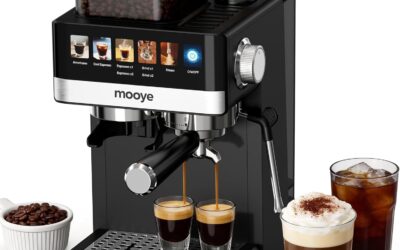
Pros
- Simultaneous espresso brewing and milk steaming
- Standard 58mm commercial portafilter size
- Precise digital PID temperature stability
- Integrated LCD screen with extraction shot clock
- Generous 84-ounce water reservoir
Cons
- Requires a separate standalone espresso grinder
- Substantial counter footprint and heavy profile
- Steep learning curve for complete beginners
Specifications
| Color | Brushed Stainless Steel |
|---|---|
| Size | One Size |
| Dimensions | 14.7 x 14.8 x 14.7 inches |
| Weight | 28.35 Pounds |
| Product Group | Kitchen |
| Binding | Kitchen |
Verify the current product variation before purchase; specifications may change.
Detailed Review
What stands out in the currently available product data:
- Dedicated dual stainless steel boilers allow simultaneous espresso extraction and powerful milk texturing without thermal lag
- Digital PID temperature control and an actively heated group head maintain brew water within two degrees Fahrenheit
- Commercial 58mm stainless steel portafilter holds 19 to 22 grams for balanced, full-bodied espresso
- Low-pressure pre-infusion gently expands grounds before an Over Pressure Valve caps peak extraction pressure
- Front-facing LCD panel features an integrated shot clock to track extraction timing accurately
- High-capacity 84-ounce water tank minimizes daily refills during multi-cup routines
Best For / Avoid If
Best for buyers prioritizing
- Simultaneous espresso brewing and milk steaming
- Standard 58mm commercial portafilter size
- Precise digital PID temperature stability
Consider another option if
- Requires a separate standalone espresso grinder
- Substantial counter footprint and heavy profile
- Steep learning curve for complete beginners
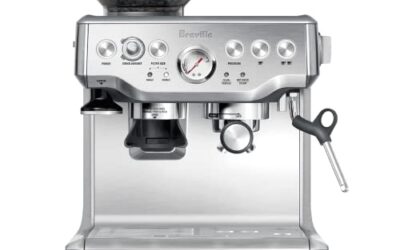
Pros
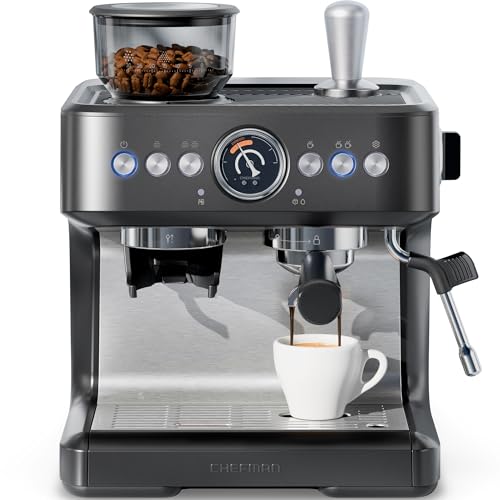
- Simultaneous brewing and milk texturing capability
- Commercial-style 58mm portafilter size
- Massive 3-liter removable water reservoir
- Built-in 30-setting conical burr grinder
- Generous accessory bundle with metal tamper
Cons
- Heavy footprint demanding dedicated counter space
- Stepped grinder limits micro-adjustments for dial-in
- Noticeable learning curve for complete beginners
Specifications
| Color | Stainless Steel |
|---|---|
| Size | Large |
| Dimensions | 13.66 x 12.68 x 13.07 inches |
| Weight | 29.5 pounds |
| Product Group | Kitchen |
| Binding | Kitchen |
Verify the current product variation before purchase; specifications may change.
Detailed Review
What stands out in the currently available product data:
- Dual boiler architecture allows simultaneous espresso extraction and milk steaming without temperature wait times
- Integrated conical burr grinder features 30 stepped settings with hands-free dosing directly into the portafilter
- Industry-standard 58mm portafilter includes single and double shot baskets for balanced extractions
- Extra-large 3-liter removable water reservoir reduces the need for frequent sink refills
- Customizable shot volume and brew temperature controls let you dial in various roast profiles
- Complete accessory pack includes a heavy stainless steel tamper, milk pitcher, dosing funnel, and internal storage tray
Best For / Avoid If
Best for buyers prioritizing
- Simultaneous brewing and milk texturing capability
- Commercial-style 58mm portafilter size
- Massive 3-liter removable water reservoir
Consider another option if
- Heavy footprint demanding dedicated counter space
- Stepped grinder limits micro-adjustments for dial-in
- Noticeable learning curve for complete beginners