
For French press coffee, a gentle stir can help wet dry grounds, especially when coffee floats or clumps after water is added. It is optional, though: stirring hard or repeatedly can disturb fine particles and leave more sediment in your cup.
Whether to stir depends on your coffee, grind, and brewing routine, not on a universal rule. This guide explains a simple approach for November 2026 and links to our French press brewing guides for equipment decisions.
No products were supplied for comparison, so this guide focuses on brewing choices rather than naming a recommended press. For most brewers, one gentle stir shortly after pouring is a reasonable starting point; compare the cup with and without it before changing other variables.
1. Wet the grounds evenly
Freshly added water can leave dry pockets in a bed of grounds, particularly if coffee floats or forms clumps. A brief, gentle stir helps bring water into contact with more grounds, supporting more even extraction.
Extraction means water dissolving flavor compounds from coffee. If some grounds remain dry while others steep, the cup may taste uneven; stirring addresses contact, but cannot correct stale coffee, poor water, or an unsuitable grind.
2. Keep agitation modest
Use a spoon to move grounds gently through the water once. Vigorous stirring or repeated mixing can keep fine particles suspended, and those particles may pass through the metal filter when you pour.
There is no need to whip or create foam. If your coffee already wets evenly and tastes balanced, skip stirring or use only a small movement to break up visible clumps.
3. Match stirring to grind size
French press is commonly brewed with a coarse grind, but grinders can still produce smaller particles called fines. Fines can contribute to a heavier, muddier cup, so extra agitation may be unwelcome when your grind already contains many of them.
If the cup has noticeable grit, first consider a more consistent, coarser grind and careful pouring rather than stirring less alone. A press filter separates grounds from liquid, but it does not remove every fine particle.
4. Choose a simple stirring moment
Pour water over the grounds, then stir gently once after the coffee is submerged. Some recipes suggest disturbing the crust near the end of steeping instead; either approach can work as a routine, but changing timing can change how much sediment reaches the cup.
Keep the rest of the recipe steady while deciding. Use the same coffee dose, water amount, grind, and steep time across comparisons, or you will not know whether stirring caused the difference.
5. Use taste and sediment as guides
If coffee tastes thin or uneven and you see dry clumps, a gentle stir is worth trying. If it tastes harsh, overly bitter, or gritty, stirring may not be the main cause; steep time, grind, coffee freshness, and pouring technique also matter.
Pour brewed coffee into cups soon after pressing. Leaving it in contact with grounds allows extraction to continue, which can make later servings taste different from the first.
6. Pick a tool that will not damage the press
A spoon is enough for this task. Avoid scraping forcefully against a glass beaker, since impact or pressure can damage glass; use a gentle motion and follow the maker’s care instructions.
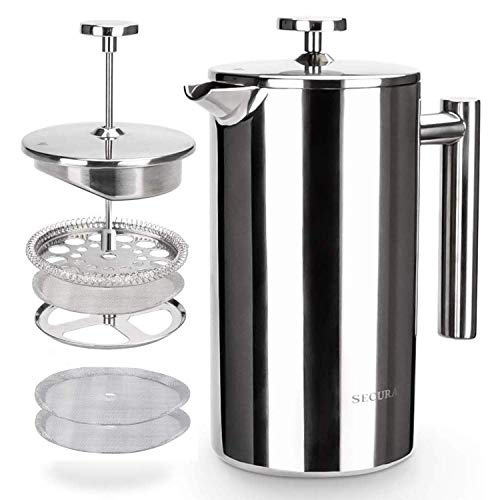
Press design matters more for daily use than any special stirring accessory. Compare cleaning needs and replacement-part options in our guides to French presses with replaceable filter assemblies and presses with replacement glass beakers.
Why You Should Trust Us
We base this guide on established French press brewing principles and distinguish practical interpretation from product-specific evidence. No products, manufacturer specifications, or comparative results were provided, so we do not claim a product winner or attribute features to a particular model.
Our recommendation is deliberately conditional: try one gentle stir when grounds appear unevenly wet, then judge the cup and sediment. Keep other brewing variables steady, and adjust grind or steep time separately if the result still misses your preference.
Final Thoughts
Should you stir French press coffee? Usually, a brief and gentle stir is useful when grounds clump or float, but it is not mandatory. Skip it when coffee wets evenly and your cup already has the body and clarity you want.
No product data was supplied, so naming best overall, value, or specialized picks would be unsupported. Choose a press for appropriate capacity, manageable cleaning, and replaceable parts if long-term repairability matters; explore the brewing methods category for alternatives.
FAQs
Should you stir French press coffee every time?
No. Stir only if it helps wet grounds evenly or break up clumps. If your usual method produces a balanced cup without visible dry pockets, there is no need to add another step.
When should you stir French press coffee?
A practical starting point is one gentle stir after adding water and submerging the grounds. Keep timing consistent when comparing results, because stirring at different stages can change agitation and sediment.
Can stirring make French press coffee bitter?
Stirring does not automatically make coffee bitter. However, agitation changes contact between water and grounds, so repeated stirring combined with a long steep may contribute to a stronger extraction than you prefer.
Does stirring cause more sediment?
It can keep fine particles suspended, making some more likely to enter the cup during pouring. A coarse, consistent grind, gentle handling, and careful pouring can help limit grit.
Should you stir French press coffee before pressing?
You can, but it is not required. If you stir near the end of steeping, keep the movement light and allow grounds to settle before pressing and pouring.
What should you use to stir French press coffee?
A spoon works for a gentle stir. Avoid forceful contact with a glass beaker, and consult your press maker’s instructions for cleaning and handling guidance.
Should you stir French press coffee in 2026?
The basic brewing choice does not depend on the calendar year. Stir gently when it solves uneven wetting, then adjust grind, steep time, or pouring only if the cup needs improvement.
What if French press coffee tastes weak after stirring?
Stirring alone cannot guarantee stronger coffee. Check your coffee-to-water ratio, grind, and steep time, changing one factor at a time; our French press guide for coffee and loose-leaf tea covers equipment versatility.