How to keep coffee hot for a christmas party starts before guests arrive. Fresh coffee loses heat quickly in open containers, while excessive reheating can make brewed coffee taste flat, bitter, or stale.
Use insulated serving equipment, brew in manageable batches, and protect coffee from unnecessary exposure. For broader holiday planning, see this guide to planning a holiday coffee tasting at home.
Choose Insulation Before Maximum Heat
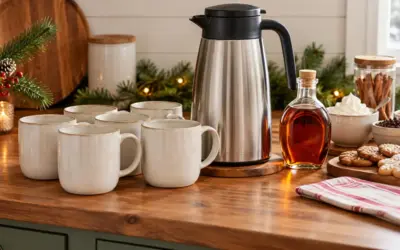
An insulated carafe usually protects coffee better than an open glass pot sitting on a warming plate. Vacuum insulation slows heat transfer, helping coffee stay warmer while reducing continued cooking.
Glass carafes can work for short serving windows, especially when a machine keeps the pot warm. However, prolonged contact with a hot plate can gradually concentrate bitter flavors as water evaporates.
Match Batch Size to Guest Timing
Large batches sound convenient, but coffee quality suffers when a pot sits untouched for hours. Estimate demand by considering drinking preferences, meal timing, and whether guests will serve other beverages.
Brew smaller batches at intervals when possible. A fresh second batch often tastes better than one oversized batch held warm throughout the entire party.
Preheat Every Heat Retaining Container
Cold serving equipment absorbs heat from fresh coffee immediately. Fill an insulated carafe with hot water, wait several minutes, then empty it before adding brewed coffee.
Preheating does not create additional heat, but it reduces the initial temperature drop. Keep the lid closed until serving, because frequent opening releases heat and aroma.
Control Brewing Temperature and Extraction
Hot serving coffee begins with properly brewed coffee. Water that is too cool can produce weak, under-extracted flavor, while excessive heat or prolonged contact can create harshness.
Follow your brewer’s instructions and use a consistent coffee-to-water ratio. A kitchen scale can improve repeatability, especially when preparing several batches for a larger gathering.
Use a Serving System That Fits the Room
Place coffee near cups, sweeteners, milk, napkins, and a discard area. Guests should not need to carry a hot, heavy pot across a crowded kitchen or dining room.
Airpots and pump carafes can reduce spills because guests serve from a stationary container. Choose equipment with a stable base, clear operation, and a lid that closes securely after dispensing.
Protect Flavor During Holding
Heat retention and flavor retention are different goals. Coffee can remain warm while its aroma fades, so keep the container closed and avoid transferring coffee between multiple open vessels.
Do not mix a fresh batch into old coffee unless you accept uneven flavor. Labeling each batch with brew time helps you rotate coffee and remove containers that have sat too long.
Plan Milk, Cream, and Alternative Drinks Separately
Milk and cream need different handling from brewed coffee. Keep dairy chilled until serving, then provide small quantities that guests can replace instead of leaving one large container out.
Plant-based beverages may have different heating and storage instructions. Serve them according to package guidance, and avoid keeping any perishable addition warm for extended periods.
Simple Party Workflow
- Clean and dry the brewer, carafe, and serving containers before setup.
- Preheat insulated vessels with hot water, then empty them.
- Grind coffee shortly before brewing when whole beans are available.
- Brew a moderate first batch shortly before guests want coffee.
- Move coffee into a preheated insulated container when appropriate.
- Keep lids closed and monitor remaining volume during service.
- Prepare another small batch when demand supports it.
- Discard old coffee according to your household’s quality and food-safety practices.
For gift-focused holiday hosting ideas, the Coffee Gifts category offers related planning topics. For brewing equipment guidance, review the Coffee Accessories category.
Common Mistakes That Cool Coffee Faster
Leaving the lid open is one of the simplest avoidable problems. Each opening releases heat, while a wide uncovered surface allows heat and aroma to escape rapidly.
Another mistake is brewing far too early. A warming plate may preserve temperature for a while, but extended heating can change flavor even when coffee remains drinkably warm.
Overfilling a serving vessel also creates workflow problems. Coffee may spill during transport, and guests may wait longer because one container must serve everyone before another batch starts.
Why You Should Trust Us
Our guidance separates established brewing principles from editorial interpretation. We assess insulation, workflow, capacity, cleaning demands, and temperature management without claiming personal ownership or unsupported performance results.
No product data was supplied for this guide, so no specific machine receives a product recommendation. Verify manufacturer instructions, warranty terms, vessel compatibility, and cleaning requirements before purchase.
Final Thoughts
The strongest approach combines a preheated insulated container, correctly brewed coffee, closed lids, and batch timing matched to guest demand. No single appliance can prevent flavor decline when coffee sits hot for too long.
There are no listed products to identify as best overall, best value, or best for a specific use. Buyers should skip any setup that depends on an uncovered pot, prolonged hot-plate holding, or unclear cleaning instructions.
For a Christmas party, prioritize predictable service over maximum capacity. A smaller, repeatable workflow often gives guests warmer, fresher coffee than one oversized batch prepared hours ahead.
FAQs
How to keep coffee hot for a christmas party without making it bitter?
Use an insulated carafe, keep its lid closed, and brew smaller batches instead of leaving coffee on a hot plate for hours.
Is an insulated carafe better than a glass coffee pot?
An insulated carafe generally limits ongoing heat exposure, while a glass pot on a warming plate may preserve heat but gradually alter flavor.
Should I preheat a coffee carafe?
Yes. Fill it with hot water briefly, empty it, and add brewed coffee afterward. This reduces the initial heat loss to the container.
How far ahead should I brew party coffee?
Brew close to expected serving time, then prepare another batch when demand continues. Exact timing depends on equipment, batch size, and serving conditions.
Can I keep coffee warm in a slow cooker?
A slow cooker is not designed specifically for brewed coffee and may encourage prolonged heating. An insulated, purpose-built beverage container is usually easier to manage.
How much coffee should I make for Christmas guests?
Estimate servings from expected coffee drinkers, cup size, meal timing, and other beverages. Prepare a moderate first batch, then adjust from actual demand.
How do I keep coffee hot while guests serve themselves?
Use a stable insulated carafe or airpot on a clear, heat-safe surface. Place cups, additions, napkins, and waste collection beside it.
Does grinding beans immediately before brewing help party coffee?
Grinding shortly before brewing can preserve more aroma than grinding far in advance, but correct brewing and holding practices still matter.
Where can I find more coffee hosting guidance for 2026?
See our holiday coffee tasting guide for ideas about sequencing, serving, and organizing a seasonal coffee gathering.