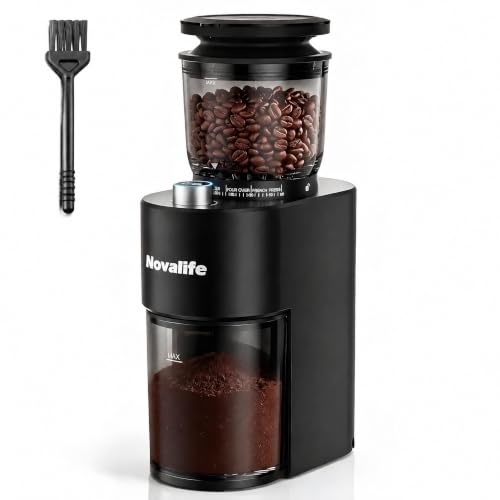

The best single dose grinder with low retention depends on what you brew, how often you switch beans, and how much grind adjustment you need. This shortlist covers 6 options, from filter-focused designs to grinders with espresso-oriented stepless adjustment.
Low retention means less ground coffee remains inside the grinder after a dose, but manufacturer figures use different conditions and methods. For background on dosing workflow, see our guide to how single-dose coffee grinders work.

Pros
- Large 64mm flat burrs for high grind clarity
- Anti-static technology significantly reduces mess
- Auto-stop sensor shuts motor off automatically
- Compact counter footprint under ten inches tall
- Low retention with built-in chute knocker
Cons
- Not capable of grinding fine enough for espresso
- Small 100g hopper limits large batch brewing
- Higher price tier for a non-espresso grinder
Specifications
| Color | Matte Black |
|---|---|
| Size | 120v, Type B Plug |
| Dimensions | 9.40943 x 4.13385 x 9.775571 inches |
| Weight | 9.92 pounds |
| Product Group | Kitchen |
| Binding | Kitchen |
Verify the current product variation before purchase; specifications may change.
Detailed Review
What stands out in the currently available product data:
- Commercial-grade 64mm flat burrs deliver uniform particle distribution for sweeter, clearer pour-over and drip brews
- Dedicated filter coffee range with 31 stepped settings tailored specifically from French press down to pour-over
- Integrated anti-static system and built-in knocker minimize retention and keep countertops clean
- Compact 100g single-dose hopper preserves bean freshness by grinding strictly on demand
- Auto-stop sensor automatically shuts down the motor as soon as the hopper empties
- Magnetically aligned catch cup snaps directly into place beneath the chute to prevent stray grounds
Best For / Avoid If
Best for buyers prioritizing
- Large 64mm flat burrs for high grind clarity
- Anti-static technology significantly reduces mess
- Auto-stop sensor shuts motor off automatically
Consider another option if
- Not capable of grinding fine enough for espresso
- Small 100g hopper limits large batch brewing
- Higher price tier for a non-espresso grinder

Pros
- Custom 54mm stainless steel flat burrs
- Integrated ionizer actively minimizes grind static
- Stepless adjustment dial tuned for espresso
- Minimal grind retention for clean single dosing
- Compact footprint fits crowded coffee bars
Cons
- Transparent dosing cup made of plastic rather than metal
- Portafilter cradle tailored primarily to 58mm sizes
- Single-dose design requires weighing each dose manually
Specifications
| Color | Black |
|---|---|
| Size | One Size |
| Dimensions | 7 x 4.5 x 12 inches |
| Weight | 10 pounds |
| Product Group | Kitchen |
| Binding | Kitchen |
Verify the current product variation before purchase; specifications may change.
Detailed Review
What stands out in the currently available product data:
- Custom 54mm stainless steel flat burrs produce consistent grind sizes suitable for dialed-in espresso
- Built-in plasma ionizer neutralizes static charge at the chute to keep your counter clean
- Single-dose architecture delivers sub-0.1-gram retention to keep every dose fresh without waste
- Stepless collar adjustment with a dedicated metal indicator makes small grind changes easy to track
- Updated anti-popcorn disc stabilizes bean feed and keeps the included bellow firmly seated
- Slim profile occupies just 4.5 inches of counter width for easy placement under low cabinets
Best For / Avoid If
Best for buyers prioritizing
- Custom 54mm stainless steel flat burrs
- Integrated ionizer actively minimizes grind static
- Stepless adjustment dial tuned for espresso
Consider another option if
- Transparent dosing cup made of plastic rather than metal
- Portafilter cradle tailored primarily to 58mm sizes
- Single-dose design requires weighing each dose manually

Pros
- Stepless collar for precise espresso micro-adjustments
- Tilted body and bellows minimize grind retention
- Durable 40mm conical stainless steel burrs
- Sturdy all-aluminum metal construction
- Slim footprint fits tight counter spaces
Cons
- Small 40g capacity limits large batch brewing
- Factory testing leaves residual coffee grounds inside
- Manual bellows pumping required for zero retention
Specifications
| Color | Black |
|---|---|
| Size | 40mm burr |
| Dimensions | 6.75 x 3.75 x 12.5 inches |
| Product Group | Kitchen |
| Binding | Kitchen |
Verify the current product variation before purchase; specifications may change.
Detailed Review
What stands out in the currently available product data:
- Stepless adjustment mechanism allows micro-calibration for dialed-in espresso extraction
- Durable 40mm stainless steel conical burrs deliver uniform particle size across brew methods
- Tilted base and bellows system actively purge the grind chamber to minimize retention
- Solid all-aluminum body provides dependable stability and helps dampen motor vibration
- Compact footprint under four inches wide frees up essential kitchen counter space
- Single-dose 40-gram hopper design keeps whole beans fresh without hopper staleness
Best For / Avoid If
Best for buyers prioritizing
- Stepless collar for precise espresso micro-adjustments
- Tilted body and bellows minimize grind retention
- Durable 40mm conical stainless steel burrs
Consider another option if
- Small 40g capacity limits large batch brewing
- Factory testing leaves residual coffee grounds inside
- Manual bellows pumping required for zero retention

Pros
- Large 63mm conical burr set
- Ultra-slow 80 RPM cold-grind motor
- Near-zero retention workflow with bellows
- Stepless 20-micron adjustment precision
- Active plasma anti-static ionizer
Cons
- Slow grind speed requires extra patience
- Single-dose capacity limits large batch brewing
- Requires manual bellows pumping for minimal retention
Specifications
| Color | Black |
|---|---|
| Size | Compact |
| Dimensions | 6 x 3.8 x 12 inches |
| Weight | 6 pounds |
| Product Group | Kitchen |
| Binding | Kitchen |
Verify the current product variation before purchase; specifications may change.
Detailed Review
What stands out in the currently available product data:
- Large 63mm high-carbon stainless steel conical burrs deliver uniform particle size with fewer fines for enhanced flavor clarity and body
- Ultra-slow 80 RPM DC motor prevents heat buildup to protect volatile aromatic compounds during grinding
- Integrated plasma anti-static technology and silicone bellows reduce grind retention to less than 0.1 grams
- Stepless collar with 20-micron micro-adjustments allows precise calibration for espresso and manual brew methods
- Magnetic dosing cup snaps directly into alignment to prevent stray coffee grounds on the counter
- Durable all-metal exterior provides stability and vibration damping during daily use
Best For / Avoid If
Best for buyers prioritizing
- Large 63mm conical burr set
- Ultra-slow 80 RPM cold-grind motor
- Near-zero retention workflow with bellows
Consider another option if
- Slow grind speed requires extra patience
- Single-dose capacity limits large batch brewing
- Requires manual bellows pumping for minimal retention

Pros
- Large 48mm conical burr set
- Quiet sub-50dB operating noise
- Magnetic auto-aligning dosing cup
- Ultra-compact aluminum body
- Universal 100-240V power support
Cons
- Single-dose capacity unsuitable for large batch pots
- Requires manual bellow pumping for zero retention
- Lesser-known brand with limited long-term history
Specifications
| Color | Black |
|---|---|
| Size | small |
| Dimensions | 6 x 3 x 8 inches |
| Weight | 3.39 pounds |
| Product Group | Kitchen |
| Binding | Kitchen |
Verify the current product variation before purchase; specifications may change.
Detailed Review
What stands out in the currently available product data:
- Large 48mm five-blade conical burrs produce consistent grind sizes from fine espresso to coarse French press
- Magnetic dosing cup and sealed anti-static lid prevent stray grounds from scattering across the counter
- Blow-out funnel actively expels retained coffee particles to maintain low waste and fresh flavor
- Quiet motor operates below 50 decibels for peaceful early-morning coffee preparation
- Durable, slim aluminum housing saves counter space without sacrificing bench stability
- Universal 100 to 240 volt input allows versatile operation across different regional electrical standards
Best For / Avoid If
Best for buyers prioritizing
- Large 48mm conical burr set
- Quiet sub-50dB operating noise
- Magnetic auto-aligning dosing cup
Consider another option if
- Single-dose capacity unsuitable for large batch pots
- Requires manual bellow pumping for zero retention
- Lesser-known brand with limited long-term history

Pros
- Minimal grind retention down to 0.1 grams
- 75 distinct grind size adjustments
- Anti-static discharge minimizes counter mess
- Quiet DC motor and metal gearbox
- Compatible with common 51mm, 54mm, and 58mm portafilters
Cons
- Single-dosing hopper requires weighing beans prior to every grind
- Stepped adjustment offers less precision than stepless espresso dials
- Distinctive rose gold finish may clash with neutral decor
Specifications
| Color | Rose Gold |
|---|---|
| Size | 75 |
| Dimensions | 8.85 x 6.14 x 11.93 Inches |
| Product Group | Kitchen |
Verify the current product variation before purchase; specifications may change.
Detailed Review
What stands out in the currently available product data:
- Low retention between 0.1 and 0.2 grams keeps grounds fresh and reduces waste between single doses
- Wide 75-step adjustment scale covers fine espresso up to coarse French press brews
- Commercial-style 40mm six-star forged conical burr yields consistent particle sizes
- Built-in anti-static system curbs flying chaff and messy counter scatter
- Smooth DC motor with all-metal gears dampens harsh morning grinding noise
- Adjustable timer runs from 5 to 60 seconds for reproducible dosing routines
Best For / Avoid If
Best for buyers prioritizing
- Minimal grind retention down to 0.1 grams
- 75 distinct grind size adjustments
- Anti-static discharge minimizes counter mess
Consider another option if
- Single-dosing hopper requires weighing beans prior to every grind
- Stepped adjustment offers less precision than stepless espresso dials
- Distinctive rose gold finish may clash with neutral decor
Match Grind Range to Your Brewing Method
Start with your main brewing method, not the broadest range advertised. Espresso needs fine, controllable adjustments; pour-over and drip usually need coarser settings, while French press uses coarser grounds.
The Fellow Ode Gen 2 is explicitly designed for brewed coffee and is not for espresso. MiiCoffee DF54, Turin SK40, and the other listed models advertise espresso and filter versatility, though usable range alone does not establish cup quality.
Understand Retention Claims and Dosing
Retention matters most when you change beans often or want the ground dose to closely match beans weighed beforehand. Residual grounds can carry into the next coffee, while static and grounds scattered around the outlet add cleanup.
MiiCoffee states less than 0.1 gram retention, and Wirsh claims less than 0.1 gram with a 10-gram dose. These are manufacturer specifications, not directly comparable independent measurements; bellows, purge habits, coffee, and measurement method can change results.
AMZCHEF lists retention of 0.1 to 0.2 gram, while Viesimple claims less than 0.2% debris residue. A percentage and a mass figure describe different measures, so avoid treating them as a shared ranking.
Choose Adjustment Style for Your Routine
Stepless adjustment allows continuous changes rather than restricting you to fixed clicks. That fine control can help espresso users adjust extraction as beans age or change, but it may take more care to return to a previous setting.
MiiCoffee DF54 and Turin SK40 specify stepless adjustment; AMZCHEF lists 75 settings. For espresso, small grind changes can affect shot flow, so mark settings or record them when switching coffees.
Learn how the adjustment tradeoff works in our guide to stepped versus stepless grinders. Treat setting counts as a control description, not proof that one grinder makes better coffee.
Consider Burr Geometry and Intended Cup
Burr type and size can influence grind distribution, but specifications alone cannot predict your preferred flavor. Flat and conical burrs describe different cutting geometries; your beans, brew recipe, and grinder alignment also shape extraction.
Fellow lists 64 mm flat burrs and a two-stage geometry for brewed coffee. MiiCoffee lists 54 mm flat burrs, while Turin SK40 uses 40 mm conical burrs; the remaining options list their own conical burr sizes.
Use these details to narrow by intended use, not to assume larger burrs automatically produce better results. If you switch between espresso and filter, prioritize a practical adjustment range and repeatable workflow over burr diameter alone.
Check Static Control, Bellows, and Cleanup
Anti-static features, catch cups, outlet designs, and bellows can reduce mess or help clear grounds, but none removes the need for periodic cleaning. Coffee oils and fine particles accumulate, particularly with frequent use and oily beans.
Fellow lists anti-static technology and a built-in knocker; MiiCoffee includes a plasma generator and describes a blow-out funnel. Turin lists a tilted base and bellows, while Wirsh describes plasma control and tool-free disassembly.
Viesimple and AMZCHEF also advertise static-management features and ways to clear the outlet. For practical maintenance, follow our advice on purging a grinder between beans, while checking each model’s manual before cleaning.
Balance Capacity, Footprint, Noise, and Speed
Single dosing avoids leaving a large bean supply in a hopper, but the dose container still needs to fit your recipe. Fellow lists a 100-gram load bin; Turin lists a 40-gram hopper capacity, which is ample for weighing individual home doses.
Wirsh advertises operation at 80 RPM and under 65 dB; Viesimple claims under 50 decibels. These manufacturer figures may use different test conditions, so they do not establish a reliable noise comparison across models.
Check grinder height, width, and space for its cup before buying, especially beneath cabinets. A quieter or smaller design may suit shared kitchens, but do not assume a listed speed guarantees a particular flavor or workflow.
Review Support, Warranty, and Ownership Costs
Purchase value includes more than burrs and adjustment controls. Consider cleaning access, replacement-part availability, warranty terms, and whether included cups or funnels fit your espresso equipment before deciding.
Viesimple lists a two-year warranty, while comparable warranty details are not supplied here for every grinder. Confirm current coverage and service terms directly with the seller or manufacturer, and do not infer durability from metal construction alone.
Why You Should Trust Us
We base this comparison on the supplied product specifications and descriptions, separating stated features from editorial interpretation. We do not present manufacturer retention, noise, or performance claims as independently verified measurements.
Our recommendations focus on fit: brew method, adjustment needs, dosing habits, cleaning, and available support. Where product evidence is incomplete, we identify the gap rather than infer a test result or guarantee an outcome.
Final Thoughts
For a filter-focused best overall choice, Fellow Ode Gen 2 stands out on paper with 64 mm flat burrs, 31 brewed-coffee settings, a 100-gram load bin, and automatic shutoff. Skip it if espresso is part of your routine, because the listed design is not intended for espresso grinding.
MiiCoffee DF54 is a strong value-oriented fit for buyers who want stepless espresso adjustment and a manufacturer-stated retention figure below 0.1 gram. Turin SK40 offers a compact, conical-burr alternative with stepless control; choose it if that form and adjustment approach suit your counter and brewing habits.
For a specific low-speed workflow, Wirsh Geimori GU63 lists 80 RPM, stepless adjustment, and a magnetic dosing cup, though its claims are not independent test results. Before choosing any model, compare service terms and learn why grounds stick to grinders so static and cleanup expectations stay realistic.
FAQs
What does low retention mean in a coffee grinder?
Low retention means less ground coffee remains in the grinder after a dose. Less carryover can help when changing beans, but the result depends on grinder design, coffee, and dosing technique.
Is a single-dose grinder better for changing beans?
It can make bean changes more convenient because you weigh each dose instead of storing a larger supply in the hopper. Residual grounds may still remain, so purge or clean the grinder as its manual recommends.
Can the Fellow Ode Gen 2 grind for espresso?
No. Its supplied specifications say it is designed for brewed coffee and not espresso. Espresso buyers should consider a grinder whose manufacturer explicitly lists espresso capability and fine adjustment.
Are stepless grinders useful for espresso?
Stepless controls allow continuous adjustment, which can help dial in espresso flow. They can also make it harder to return precisely to a previous setting, so note settings when changing beans.
Does a larger burr guarantee better coffee?
No. Burr diameter is one specification, not a stand-alone measure of cup quality. Burr geometry, alignment, grind distribution, beans, and brewing technique also affect extraction and flavor.
How should I compare grinder retention claims?
Check whether claims use the same dose size, grinder preparation, and measurement method. Figures supplied here come from product descriptions and are not standardized independent comparisons.
Do bellows eliminate the need to clean a grinder?
No. Bellows can help move residual grounds through the outlet, but they do not replace periodic cleaning. Use the manufacturer’s maintenance instructions to avoid damaging burrs or internal parts.
Which features matter most in the best single dose grinder with low retention for 2026?
Prioritize compatibility with your brew method, useful adjustment control, manageable cleanup, and support terms. Retention specifications help compare designs, but should not outweigh whether the grinder suits your daily brewing routine.