
How much coffee for a holiday party depends less on a perfect universal number and more on guest habits, serving duration, cup size, and competing drinks. Start with expected servings, convert those servings into brewer capacity, then reserve enough coffee for late arrivals and second cups.
This guide covers preparation, brewing workflow, holding time, cleanup, and common planning mistakes. For more event ideas, pair this plan with the holiday coffee tasting guide, especially when guests will sample several coffees instead of drinking one house brew.
For ordinary drip coffee, plan one 8-ounce serving for each guest who will drink coffee, then add one extra serving for every four expected coffee drinkers. This reserve covers refills and small estimating errors without forcing you to brew far more than guests can finish.
Do not count every invitee as a coffee drinker. Estimate based on the event’s time, menu, age mix, and access to tea, soda, water, or alcoholic drinks, then increase the estimate when coffee will anchor dessert or breakfast.
Guest Count and Drinking Habits
Separate total attendance from expected coffee drinkers before buying beans or filters. A morning gathering usually needs a higher coffee share than an evening party where coffee appears only after dessert.
Use a range when attendance is uncertain: conservative planning minimizes leftovers, while generous planning protects against an empty thermal carafe. When in doubt, prepare the first batch modestly and keep supplies ready for a second batch.
Cup Size and Brewer Labels
Coffee maker “cups” commonly refer to small reservoir units, not standard 8-ounce mugs. Check your brewer’s manual, measure its carafe markings, and translate the planned servings into actual fluid ounces before choosing a batch size.
Large holiday mugs can hold 10 to 12 ounces, while small dessert cups may hold less. If guests serve themselves, assume portions vary and use the larger realistic serving size when checking total liquid capacity.
Ground Coffee Amount
A practical starting point is about 60 grams of ground coffee per liter of brewing water, consistent with a common coffee brewing ratio. Adjust only after considering roast strength, grind size, equipment, and guest preference.
A kitchen scale improves repeatability because scoops vary by bean density and grind. If no scale is available, follow your brewer’s guide, keep the scoop level, and record the amount that produces a balanced batch for your equipment.
| Planning factor | Practical approach | Why it matters |
|---|---|---|
| Guests | Count likely coffee drinkers | Total attendance can overstate demand |
| Serving size | Use actual mug volume | Brewer cups may be smaller than mugs |
| Reserve | Add a modest extra portion | Second cups and late arrivals increase demand |
| Equipment | Match batch size to carafe capacity | Oversized batches can weaken workflow and freshness |
Brewer Capacity and Serving Speed
Capacity matters when guests arrive close together. A smaller brewer may produce fresh coffee more often, while a larger brewer reduces waiting but can leave coffee sitting longer.
Map the serving schedule before the party begins. Fill the reservoir, stage filters and measured grounds, and decide where used grounds will go so the next batch starts quickly without blocking food preparation.
Freshness and Holding Method
Coffee quality declines during extended hot-plate holding, especially as heat and evaporation concentrate bitter flavors. Brew smaller batches more often when freshness matters, or transfer coffee to a properly preheated thermal carafe.
Keep the carafe closed between pours and avoid repeatedly reheating brewed coffee. Label regular and decaffeinated batches clearly, because guests may need to identify caffeine options quickly.
Regular, Decaffeinated, and Alternative Drinks
Offer decaffeinated coffee when the party extends into the evening or includes guests limiting caffeine. Plan it as a separate batch rather than mixing beans, since separate labeling helps guests choose confidently.
Milk, cream, sugar, syrups, tea, and water change coffee demand but do not eliminate the need for clear quantities. A small beverage station also prevents repeated questions and keeps guests away from the brewing area.
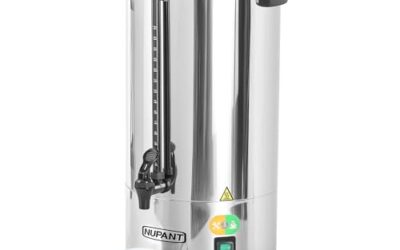
For equipment ideas, the coffee makers category provides broader context on capacity, controls, cleaning, and countertop fit. A party brewer should match your normal household routine after the event, not serve one gathering alone.
Preparation, Brewing, and Verification
Before guests arrive, clean the brewer, verify the carafe, check filter compatibility, and measure water and grounds separately. Confirm that the outlet, counter space, and cord placement keep hot liquid away from traffic and children.
Brew the first batch early enough to identify a problem without delaying service. Check volume against the carafe markings, taste a small sample for strength, and adjust the next batch with grind or coffee quantity rather than guessing.
After serving, discard grounds promptly, rinse removable parts, wipe spills, and empty leftover water from the reservoir. Follow the manufacturer’s cleaning instructions later, because mineral buildup can affect flow, temperature, and flavor over time.
Why You Should Trust Us
Our approach separates documented equipment information from practical interpretation. We focus on capacity, brewing control, workflow, cleaning, operating effort, and fit for the specific use case rather than claiming results unsupported by published data.
No product data was supplied for this guide, so no individual brewer receives a product ranking or feature claim. Recommendations remain conditional, and the shortcode is preserved for the site’s product database when records become available.
Final Thoughts
The safest planning method is simple: estimate coffee drinkers, use realistic serving sizes, add a modest reserve, and match the plan to actual brewer capacity. Fresh smaller batches often suit long parties better than one oversized batch held for hours.
Because no products were supplied, this article cannot name a best overall, best value, or event-specific machine without inventing evidence. Choose equipment that fits your regular household needs, then confirm capacity, filter availability, cleaning requirements, and warranty terms before purchase.
For related planning, browse coffee accessories for brewing and serving. The right scale, filters, storage, and thermal serving method can improve party workflow even when your existing brewer remains suitable.
FAQs
How much coffee for a holiday party should I plan per guest?
Plan one 8-ounce serving for each expected coffee drinker, then add a modest reserve for refills and late arrivals. Adjust upward when coffee anchors breakfast or dessert.
How many ounces are in a coffee maker cup?
Brewer cup markings vary and are often smaller than standard mugs. Check the manual or measure the carafe so servings match actual liquid volume.
Should I brew one large batch or several smaller batches?
Several smaller batches usually protect freshness during a long event. One large batch reduces waiting but may sit too long and lose quality.
How much ground coffee should I use for a party?
Use about 60 grams per liter of water as a starting ratio, then adjust for taste and equipment. A scale gives more consistent results than volume scoops.
Should I offer decaffeinated coffee?
Decaffeinated coffee is useful for evening gatherings and guests limiting caffeine. Brew and label it separately to prevent confusion.
How do I keep holiday party coffee fresh?
Use a preheated thermal carafe, keep its lid closed, and avoid prolonged hot-plate holding. Brew another batch when demand continues rather than reheating old coffee.
What equipment matters most for a holiday coffee station in 2026?
Capacity, serving speed, reliable filtration, simple controls, and easy cleanup matter most. Match those features to normal household use because event-only equipment can waste counter space.
How can I avoid running out of coffee?
Track expected drinkers, add a modest reserve, and keep measured grounds and filters ready for another batch. Avoid brewing all reserve coffee early, since demand may remain lower than expected.