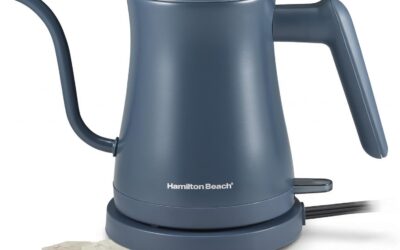
White deposits in an electric kettle usually form when minerals in hard water collect as the water heats and evaporates. They are commonly limescale, not a sign that the kettle is burning or breaking down.
Identify the residue before cleaning, then use a method suited to your kettle’s manual and materials. For pour-over routines, a controlled-pour kettle may help with brewing, but it will not prevent mineral buildup; see our coffee kettle guides.
Check whether deposits are limescale
Hard water contains dissolved minerals, especially calcium and magnesium. Heating can make some of those minerals precipitate, meaning they leave the water and collect on the kettle’s base, heating element, or walls.
Limescale often looks like a chalky white or off-white crust, or like flakes floating after water boils. Its amount depends on local water and how often you heat water, so buildup can appear faster in some homes than others.
Consider other possible residue
Not every pale mark is limescale. New kettles can retain manufacturing dust or packaging residue, while leftover detergent or cleaning solution may leave a film if the kettle was not rinsed thoroughly.
Unusual color, an oily surface, persistent odor, or residue that returns immediately after careful descaling deserves closer attention. Check the manufacturer’s care instructions, and contact support if the kettle’s interior appears damaged or the cause remains unclear.
Descale with a method approved for your kettle
First, unplug the kettle and let it cool. Follow its manual for the recommended descaler and procedure, because materials and coatings differ; never immerse the kettle base, cord, or electrical connector in water.
Many manufacturers permit a diluted food-grade citric acid solution or white vinegar, but instructions vary. Use the product’s stated dilution and contact time rather than guessing, and avoid abrasive pads that can scratch interior surfaces.
After descaling, empty the kettle and rinse it thoroughly. If the manual allows, boil fresh water and discard it before making coffee or tea; repeat rinsing if any odor or taste remains.
Reduce mineral buildup through water choice
Filtered water may improve taste and reduce some impurities, but a standard carbon filter does not necessarily remove the dissolved minerals that cause limescale. Check the filter’s stated capabilities instead of assuming filtered means soft.
Water softened by ion exchange may contain less calcium and magnesium, though its sodium content can rise. For coffee, water composition affects extraction and flavor, so do not choose water treatment solely to protect the kettle.
For pour-over brewing, kettle shape and pouring control affect workflow, not water hardness. Our gooseneck kettle guide can help compare kettle styles, while your local water remains the main factor behind recurring scale.
Empty and dry the kettle after use
Leaving water standing gives minerals more opportunity to remain behind as water evaporates. When practical, empty leftover water after use and leave the lid open until the interior dries, following the manual’s storage guidance.
Do not overfill or operate the kettle below its minimum line. These habits do not change water hardness, but they support normal operation and make it easier to notice deposits before they become thick.
Set a cleaning schedule based on buildup
There is no universal descaling interval because water mineral content and kettle use vary. Inspect the interior regularly, then descale when deposits become visible or when the manual’s maintenance schedule calls for it.
Heavy scale can take longer to remove and may interfere with heating efficiency, while frequent unnecessary cleaning adds work and can expose materials to unsuitable chemicals. Use visible buildup and manufacturer guidance to find a reasonable routine.
Why You Should Trust Us
This guide explains the common chemistry behind kettle scale and separates general care advice from model-specific instructions. No kettle testing, measurements, or product comparisons are claimed here.
Cleaning directions can differ by brand, interior material, and design, so the owner’s manual takes priority over general advice. Where a cause cannot be confirmed from the residue alone, the guide recommends inspection and manufacturer support rather than guessing.
Final Thoughts
White, chalky deposits are most often limescale from minerals in heated hard water. A manual-approved descaling method, thorough rinsing, and regular inspection address the problem without relying on abrasive scrubbing.
There are no kettle products supplied for comparison here, so there is no evidence-based best overall, value, or specialty pick. Choose a replacement based on capacity, material, controls, cleaning access, and warranty, then check whether its care instructions suit your routine.
For brewing accessories, browse the coffee accessories category or compare pour-over kettles. Neither kettle shape nor a new appliance removes minerals from your household water.
FAQs
Are white deposits in an electric kettle harmful?
White deposits are commonly mineral scale from hard water. Confirm the cause and clean the kettle according to its manual, especially if residue has an unusual color, odor, or texture.
Can I drink water with kettle limescale in it?
Limescale consists of minerals that have precipitated from water, but visible particles can affect appearance and mouthfeel. Descale and rinse the kettle as directed if flakes are entering your cup.
Does vinegar remove white deposits from an electric kettle?
Some kettle manuals allow diluted white vinegar for descaling, but others specify different methods. Follow your model’s instructions, then rinse thoroughly so vinegar odor or taste does not remain.
Can I use baking soda to descale a kettle?
Do not assume baking soda is suitable for limescale or for your kettle’s interior. Use only a cleaning method approved in the manual; abrasive scrubbing can damage surfaces.
Why do white flakes appear after boiling water?
Heating hard water can leave mineral deposits on the kettle, and loose scale may later break off into the water. Descaling according to the manufacturer’s directions can remove accumulated residue.
Will a water filter stop kettle deposits?
Not necessarily. Many common filters improve taste or reduce certain substances without removing enough calcium and magnesium to prevent scale; check the filter specifications and your local water information.
How often should I descale my electric kettle?
Frequency depends on water hardness and kettle use. Inspect for visible buildup and follow the manufacturer’s schedule rather than applying a fixed interval to every home.
Why does my electric kettle have white deposits again after cleaning?
Recurring scale usually means the water still contains minerals that precipitate during heating. Emptying the kettle after use may slow residue accumulation, but it cannot remove minerals from the incoming water.
When should I replace an electric kettle with persistent residue?
Persistent scale alone does not always mean replacement is necessary. Stop using the kettle and contact its manufacturer if you see corrosion, damaged surfaces, electrical problems, or residue that remains unexplained after correct cleaning.