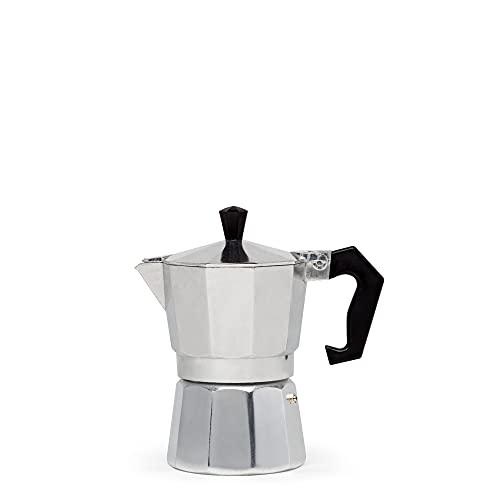
Cleaning an aluminum moka pot means removing coffee oils and grounds without treating its surface like stainless steel. Use warm water, a soft cloth, and careful drying; harsh detergents or abrasive scrubbers can damage the finish or leave unwanted residue.
This guide explains routine washing, occasional deeper cleaning, and what to check before brewing again. For choosing a brewer to give or add to your kitchen, see our moka pot gifting guide.
Start by letting the pot cool completely and separating its parts. Wash the upper chamber, filter basket, and lower chamber with warm water and a soft sponge, then rinse and dry each piece thoroughly.
1. Identify the material and care instructions
This method applies to aluminum moka pots, not every stovetop brewer. Check the manufacturer’s instructions first, especially if your pot has a coated exterior, a special handle, or parts that require specific care.
Aluminum can darken or change appearance through use and oxidation. That change alone does not establish that the pot needs aggressive scrubbing; prioritize removing loose grounds and oily residue while preserving the surface.
2. Cool the pot before taking it apart
Turn off the heat and wait until the pot is cool enough to handle safely. Opening a hot moka pot can expose you to hot water, steam, or pressure, so do not rush this step.
Unscrew the upper and lower chambers without forcing a stuck connection. If the pot resists, let it cool longer and use a dry cloth for grip rather than a tool that could dent or scratch it.
3. Empty grounds and remove the filter basket
Tap spent coffee grounds into compost or household trash, not down the sink, where grounds can collect in plumbing. Lift out the funnel-shaped filter basket and empty any grounds trapped around its rim.
Rinse the basket and chambers promptly so coffee oils have less time to cling. Inspect the basket holes and the upper chamber’s filter plate; visible grounds can obstruct water flow and affect the next brew.
4. Wash gently with water and a soft cloth
Use warm water and a nonabrasive sponge or cloth to clean surfaces. Avoid steel wool, scouring pads, and abrasive powders, which can scratch aluminum and make the finish harder to maintain.
Do not assume dishwasher cleaning is suitable. Follow the pot’s manual; when instructions are unavailable, hand washing is the cautious choice for aluminum. Use soap only if the manufacturer permits it, then rinse thoroughly.
5. Rinse, dry, and check the seal
Rinse away loosened residue and any permitted cleaning product. Dry every part with a clean towel or let the pieces air-dry separately; putting a damp pot away assembled can trap moisture.
Check the rubber gasket for cracks, stiffness, or residue, and make sure the filter plate sits correctly. A worn or misplaced gasket can interfere with sealing, so consult the manufacturer’s guidance if replacement is needed.
6. Clean more deeply only when needed
If coffee oils or buildup remain after routine washing, first check the manual for an approved cleaning method. Avoid guessing with vinegar, baking soda, bleach, or other household chemicals; compatibility and recommended procedures vary by pot.
For mineral scale, follow manufacturer instructions rather than using a generic descaling recipe. Scale differs from coffee residue, and an unsuitable acid or prolonged soak may affect aluminum or other components.
7. Reassemble only when parts are clean and dry
Confirm the basket and filter plate are clear, the gasket is seated, and all parts are dry. Screw the chambers together securely by hand, without overtightening or using a wrench.
For another moka pot overview and seasonal options, browse our moka pot category. Choose care instructions for your specific brewer over general advice whenever they differ.
Why You Should Trust Us
We base this guide on general moka pot care principles and the practical differences between aluminum and more abrasion-resistant materials. No product testing or manufacturer manual was supplied for this article, so we do not claim a specific cleaner, soak time, or method suits every model.
That limitation matters: coatings, gaskets, and manufacturer instructions can vary. When a pot’s care manual is available, use it as the final authority, particularly for detergents, dishwasher use, and scale removal.
Final Thoughts
The dependable routine is simple: cool the pot, separate its parts, remove grounds, wash gently, rinse, and dry completely. This preserves a low-effort cleaning habit without assuming aluminum needs polishing or aggressive treatment.
No products were supplied for comparison, so we cannot name evidence-based best-overall, value, or special-use picks. For gift ideas or a broader selection of brewers, explore our moka pot gift guide.
FAQs
Can you wash an aluminum moka pot with dish soap?
Check the manufacturer’s instructions. If soap is permitted, use a small amount and rinse thoroughly; if care guidance is unavailable, warm water and a soft cloth are the cautious starting point.
Can an aluminum moka pot go in the dishwasher?
Do not assume it is dishwasher-safe. Consult the manual, because detergent, heat, and the pot’s finish or components may make dishwasher cleaning unsuitable.
Should you clean a moka pot after every use?
After each use, empty the grounds, rinse the parts, and dry them before storage. This routine clears fresh residue and helps prevent damp parts from being stored assembled.
Is a darkened aluminum moka pot dirty?
Not necessarily. Aluminum can change appearance with use, so judge cleanliness by residue, grounds, and buildup rather than color alone; avoid abrasive scrubbing to restore a bright finish.
Can you use vinegar to clean an aluminum moka pot?
Use vinegar only if the manufacturer recommends it. Acidic cleaners may not suit every aluminum pot or component, and a manual-approved method is safer than an improvised soak.
How do you remove coffee grounds from the filter holes?
Rinse the basket and filter plate under water, then use a soft cloth or soft brush if needed. Avoid pins or sharp tools that could enlarge holes or damage the parts.
How should you store an aluminum moka pot?
Dry the parts completely and store them separated or loosely assembled in a dry place. This allows remaining moisture to escape instead of staying trapped inside the closed pot.
How to clean an aluminum moka pot without scratching it?
Use warm water, a soft sponge or cloth, and gentle pressure. Skip steel wool, abrasive powders, and scouring pads; see our brewing methods category for more equipment guidance.