
Holiday shopping seasons create substantial discounts across brewing gear, making home espresso accessible for many kitchens. Securing genuine value requires looking beyond high markdown percentages to verify core heating stability, extraction pressure, and milk frothing control.
Whether prioritizing quick pod convenience or full manual control, selecting the right model requires matching daily workflow to mechanical capabilities. You can explore broader design styles in our latte machines category guide before committing to seasonal holiday purchases.

Pros
- Integrated grinder with 20 grind levels
- Adjustable pre-infusion timing
- Three selectable PID temperature levels
- Generous 61-ounce removable water tank
- Compact all-in-one footprint
Cons
- Single boiler cannot brew and steam simultaneously
- Manual steaming involves a learning curve
- Lightweight chassis requires holding down during portafilter lock
Specifications
| Color | Black |
|---|---|
| Size | 61oz Water Tank |
| Dimensions | 11.2 x 9.1 x 14.2 inches |
| Product Group | Kitchen |
Verify the current product variation before purchase; specifications may change.
Detailed Review
What stands out in the currently available product data:
- Integrated 20-step grinder streamlines prep work and saves valuable counter space
- Adjustable 3 to 10 second pre-infusion gently saturates the puck to help prevent channeling
- Three-stage PID temperature control stabilizes extraction heat between 197 and 205 degrees Fahrenheit
- High-pressure 20-bar pump and 1350W heating system deliver fast warm-up and steady pressure
- Manual steam wand enables control over milk froth density for lattes and cappuccinos
- Large 61-ounce removable water tank minimizes interruptions for refills during multi-cup routines
Best For / Avoid If
Best for buyers prioritizing
- Integrated grinder with 20 grind levels
- Adjustable pre-infusion timing
- Three selectable PID temperature levels
Consider another option if
- Single boiler cannot brew and steam simultaneously
- Manual steaming involves a learning curve
- Lightweight chassis requires holding down during portafilter lock

Pros
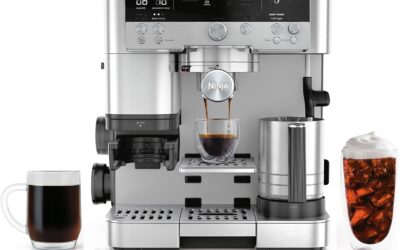
- Built-in hot and cold multi-speed milk frother
- Automatic pod recognition via BrewID system
- Six cup sizes including concentrated espresso-style shots
- Five strength and six temperature customization levels
- Voice assistant integration with Alexa and Google Home
Cons
- Advanced recipe features require reliable home WiFi connection
- Larger footprint requires substantial kitchen counter space
- Produces concentrated coffee shots rather than true high-pressure espresso
Specifications
| Color | Black |
|---|---|
| Size | 32 K-Cup Pods |
| Dimensions | 12.1 x 11 x 17.2 Inches |
| Weight | 1 pounds |
| Product Group | Kitchen |
| Binding | Kitchen |
Verify the current product variation before purchase; specifications may change.
Detailed Review
What stands out in the currently available product data:
- BrewID technology scans your K-Cup to automatically optimize brew strength and water temperature for each specific blend
- Integrated hot and cold milk frother features three whisk speeds to texture dairy or plant-based milks for lattes and cappuccinos
- MultiStream technology pierces pods with multiple water streams for more balanced saturation and richer extraction
- Companion mobile app unlocks Barista Mode with step-by-step beverage recipes, remote scheduling, and voice assistant integration
- Six brew sizes provide concentrated 2 oz and 4 oz shots alongside standard 6 to 12 oz drip-style cups
- Dedicated Brew Over Ice setting adjusts water delivery to protect coffee strength against melting ice
Best For / Avoid If
Best for buyers prioritizing
- Built-in hot and cold multi-speed milk frother
- Automatic pod recognition via BrewID system
- Six cup sizes including concentrated espresso-style shots
Consider another option if
- Advanced recipe features require reliable home WiFi connection
- Larger footprint requires substantial kitchen counter space
- Produces concentrated coffee shots rather than true high-pressure espresso

Pros
- Built-in adjustable conical burr grinder
- Digital PID temperature stability
- Low-pressure pre-infusion extraction
- Comprehensive accessory and cleaning bundle
- Generous 67-ounce water reservoir
Cons
- Single boiler cannot brew and steam simultaneously
- Manual milk frothing requires a learning curve
- Heavy footprint demanding dedicated counter space
Specifications
| Color | Black Truffle |
|---|---|
| Size | 2 |
| Dimensions | 13.81 x 12.53 x 15.9 inches |
| Weight | 22.09 Pounds |
| Product Group | Kitchen |
| Binding | Kitchen |
Verify the current product variation before purchase; specifications may change.
Detailed Review
What stands out in the currently available product data:
- Integrated conical burr grinder doses on demand straight into the portafilter for peak bean freshness
- Digital PID temperature control keeps brew water consistent for balanced espresso extraction
- Low-pressure pre-infusion gradually expands the coffee puck to help prevent channeling
- Manual steam wand delivers commercial-style microfoam suitable for latte art
- Dual-wall and single-wall filter baskets accommodate both beginners and experienced dialers
- Spacious 67-ounce removable water tank and half-pound bean hopper minimize frequent refills
Best For / Avoid If
Best for buyers prioritizing
- Built-in adjustable conical burr grinder
- Digital PID temperature stability
- Low-pressure pre-infusion extraction
Consider another option if
- Single boiler cannot brew and steam simultaneously
- Manual milk frothing requires a learning curve
- Heavy footprint demanding dedicated counter space
Pros
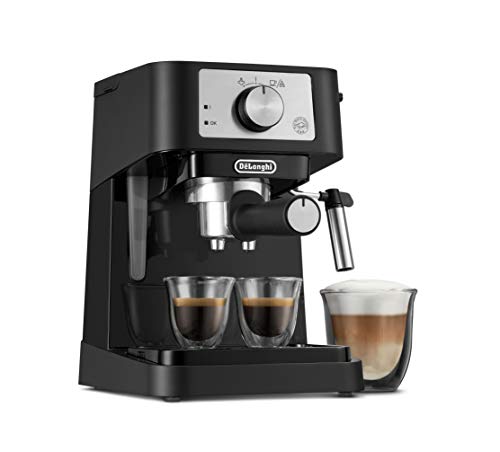
- Compact footprint for tight counters
- Durable stainless steel boiler
- Adjustable drip tray for taller glasses
- Separate baskets for single and double doses
Cons
- Requires manual timing to stop espresso extraction
- Single boiler requires brief recovery between brewing and steaming
- Lightweight build requires holding the machine while locking portafilter
Specifications
| Color | Black and Stainless |
|---|---|
| Size | 13.5 x 8.07 x 11.22 inches |
| Dimensions | 8.0699999917686 x 13.49999998623 x 11.219999988556 inches |
| Weight | 9.48 Pounds |
| Product Group | Kitchen |
| Binding | Kitchen |
Verify the current product variation before purchase; specifications may change.
Detailed Review
What stands out in the currently available product data:
- Narrow counter footprint fits comfortably in small kitchens and apartments
- Robust stainless steel boiler provides dependable heating longevity
- Manual steam wand textures milk for cappuccinos, lattes, and flat whites
- Two-tiered drip tray removes easily to fit taller mugs and glasses
- Ergonomic portafilter includes separate baskets for single and double shots
Best For / Avoid If
Best for buyers prioritizing
- Compact footprint for tight counters
- Durable stainless steel boiler
- Adjustable drip tray for taller glasses
Consider another option if
- Requires manual timing to stop espresso extraction
- Single boiler requires brief recovery between brewing and steaming
- Lightweight build requires holding the machine while locking portafilter
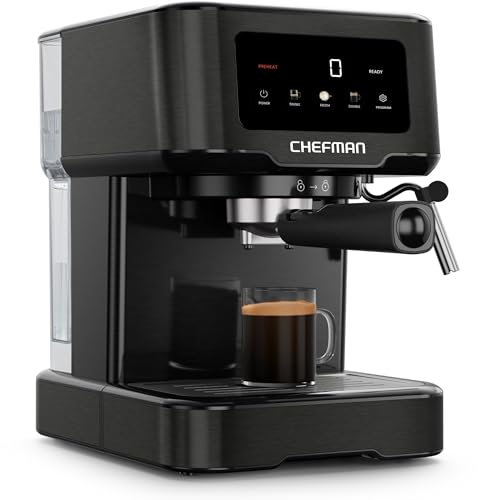
Pros
- Programmable shot volume and integrated timer
- Spacious 1.5-liter removable water tank
- Automatic descale indicator after 500 brews
- Compact footprint suited for smaller kitchens
- Includes single and double shot filter baskets
Cons
- Manual steaming wand requires technique to master
- Requires a standalone grinder for whole beans
- Lightweight construction may shift during portafilter locking
Specifications
| Color | Stainless Black |
|---|---|
| Size | 1.5 Liter |
| Dimensions | 10.79921258741 x 8.90157479407 x 11.90157479101 inches |
| Product Group | Kitchen |
| Binding | Kitchen |
Verify the current product variation before purchase; specifications may change.
Detailed Review
What stands out in the currently available product data:
- 15-bar pump provides the necessary pressure to extract concentrated single or double espresso shots
- Digital touch interface with built-in timer enables precise shot volume customization from ristretto to lungo
- Integrated manual steam wand gives you hands-on control over milk texture for lattes and cappuccinos
- Removable 1.5-liter water reservoir allows quick sink refills and handles multiple drinks back to back
- Automated descaling alert activates after 500 brew cycles to streamline routine machine upkeep
- Compact frame with stainless black finish fits easily underneath standard kitchen cabinets
Best For / Avoid If
Best for buyers prioritizing
- Programmable shot volume and integrated timer
- Spacious 1.5-liter removable water tank
- Automatic descale indicator after 500 brews
Consider another option if
- Manual steaming wand requires technique to master
- Requires a standalone grinder for whole beans
- Lightweight construction may shift during portafilter locking

Pros
- Consistent 9-bar extraction pressure
- Fast Thermoblock heating system
- Programmable auto-stop dosing presets
- Compact, space-saving countertop footprint
- Versatile manual steam wand
Cons
- Manual milk steaming requires practice
- Lightweight frame may shift when locking portafilter
- Limited clearance for tall travel mugs
Specifications
| Color | Black |
|---|---|
| Dimensions | 11.4 x 12 x 8.9 inches |
| Weight | 9 Pounds |
| Product Group | Kitchen |
| Binding | Kitchen |
Verify the current product variation before purchase; specifications may change.
Detailed Review
What stands out in the currently available product data:
- Consistent 9-bar pressure ensures balanced extraction and rich crema
- Fast Thermoblock heating system reaches brewing temperature quickly
- Manual steam wand textures milk for custom lattes and cappuccinos
- Customizable single and double shot presets automate ideal brew volumes
- Auto-stop function prevents over-extraction without constant monitoring
- Compact footprint under twelve inches wide fits small kitchen setups
Best For / Avoid If
Best for buyers prioritizing
- Consistent 9-bar extraction pressure
- Fast Thermoblock heating system
- Programmable auto-stop dosing presets
Consider another option if
- Manual milk steaming requires practice
- Lightweight frame may shift when locking portafilter
- Limited clearance for tall travel mugs

Pros
- Compact footprint under six inches wide
- Straightforward single-knob operation
- Integrated milk frothing wand
- Quick heat-up from 800W boiler
Cons
- 3.5-bar pressure yields thin crema unlike true 9-bar pump
- Lightweight build shifts during portafilter locking
- No manual water temperature adjustments
Specifications
| Color | Black |
|---|---|
| Size | S |
| Dimensions | 8.3 x 6 x 11.8 inches |
| Weight | 3.45 pounds |
| Product Group | Kitchen |
Verify the current product variation before purchase; specifications may change.
Detailed Review
What stands out in the currently available product data:
- Fast 800W boiler reaches brew heat in minutes
- 3.5-bar steam extraction yields mild espresso-style drinks
- Adjustable steam wand textures milk for cappuccinos and lattes
- Single-dial interface switches between brewing and steaming
- Six-inch width fits small counters and desks
- Overheat and overpressure safety shutoffs protect machine
Pump Pressure and Extraction Mechanics
True espresso extraction relies on controlled pressure pushing hot water through finely ground coffee. Traditional Italian standards target 9 bars of pressure at the puck for balanced oil extraction. Entry pump units often advertise 15 to 20 bars to compensate for less consistent internal flow restriction.
Budget machines using pressurized filter baskets can mask grind inconsistencies by forcing coffee through tiny single apertures. While helpful for pre-ground beans, unpressurized baskets paired with consistent pressure produce richer crema and nuanced flavors. Understanding pump mechanisms prevents paying premium rates for inflated pressure numbers.
Milk Frothing Systems and Steam Capability
A true latte demands silky steamed milk with fine microfoam rather than stiff, dry bubbles. Basic steam wands with slip-on aerator sleeves inject excess air automatically, limiting control over drink texture. Commercial-style manual wands allow you to tilt the pitcher, stretch the milk volume, and roll it into sweet microfoam.
Single-boiler appliances require transition time between brewing temperature and higher steaming heat. If you plan to serve multiple milk drinks back-to-back, verify wand power and recovery speed. Explore our tips on the best milk pitcher for latte art to pair proper accessories with your steam wand.
Heating Architecture and Temperature Stability
Consistent water temperature directly dictates whether coffee extracts sweet notes or sour, under-extracted compounds. Most compact units rely on thermoblock or thermocoil heating elements that warm water on demand. Advanced consumer platforms include digital PID controllers to maintain target brew temperatures within a narrow variance.
Budget machines without PID regulation can suffer from thermal swings between pulling shots. Waiting thirty seconds between extractions helps the internal boiler stabilize, protecting shot balance. Consistent heat management remains far more critical to cup flavor than maximum wattage figures.
Grinder Integration Versus Standalone Grinders
All-in-one machines integrate conical burr grinders into the top chassis for consolidated counter footprints. These configurations offer convenience by dosing ground coffee directly into your portafilter. However, combined units mean internal heat can slightly warm stored beans, requiring frequent hopper replenishment.
Standalone espresso grinders offer wider adjustment steps and simpler paths for future hardware upgrades. If an integrated grinder fails, servicing requires shipping the entire brewer for repair. Balancing cabinet clearance against modular upgrade flexibility helps determine the best holiday hardware match.
Cleaning, Descaling, and Maintenance Routine
Espresso equipment requires strict maintenance to counter scale accumulation and milk residue build-up. Steam wands demand immediate purging and wiping with damp microfiber cloths after every single frothing session. Residual dairy baked onto metal tips degrades performance and introduces sour flavors into future drinks.
Scale deposits inside narrow boiler lines represent the leading cause of early pump failures. Machines featuring automatic cycle counters or integrated descale alerts remove guesswork from regular descaling schedules. Clear water reservoir access also streamlines daily refills and minimizes countertop spills.
Why You Should Trust Us
Our analysis relies on objective mechanical evaluation, manufacturer specifications, and practical home coffee workflow realities. We break down the technical differences between boiler styles, pump designs, and steaming assemblies without marketing hyperbole. We focus on long-term ownership costs, build durability, and practical maintenance requirements.
We do not fabricate hands-on laboratory measurements or run synthetic performance trials. Instead, our team synthesizes verified engineering data, user manuals, and extraction science to highlight genuine product value. This structured framework ensures recommendations align directly with your kitchen counter space, daily routine, and personal budget.
Final Thoughts
Holiday shopping discounts provide an ideal window to upgrade your kitchen coffee bar across varying investment levels. For an integrated, comprehensive bean-to-cup platform with precise PID control and microfoam steaming, the Breville BES870BTR Barista Express Espresso remains a standout choice for serious enthusiasts. It pairs consistent grinding mechanics with manual control necessary for practicing latte art.
For shoppers seeking solid manual espresso without an integrated grinder, the De’Longhi Stilosa Compact Manual Espresso Machine delivers exceptional budget value. Its stainless steel boiler and compact footprint provide dependable pressure extraction without unnecessary digital complexity. You can also explore our broader thoughts in the best latte machine field notes for similar compact selections.
If speed and automated drink customization take priority over manual tamping, consider the Keurig K-Café SMART Single Serve Coffee Maker. Its built-in frother handles hot or cold milk textures quickly, and the mobile connectivity tailors brew strength per pod. Assess your willingness to manage grinding and clean up to choose between manual craft and automated convenience.
FAQs
Are latte machine black friday deals actually worth shopping in 2026?
Holiday sales often bring significant price cuts on espresso hardware, particularly on models bundled with accessories or integrated grinders. Verifying standard historical pricing ensures the advertised holiday discount represents genuine savings rather than seasonal markup patterns.
What is the difference between a latte machine and a standard drip brewer?
Latte machines force pressurized hot water through fine grounds to create concentrated espresso and include steam wands for frothing milk. Drip brewers use gravity fed water through coarse grounds to produce larger volumes of filter coffee without microfoam capabilities.
Can entry-level espresso machines make cafe-quality microfoam?
Compact manual machines can produce silky microfoam if they feature a traditional single-hole steam tip. Units equipped with thick plastic auto-frothing sleeves generate stiff foam suitable for cappuccinos, but lack the texture control required for poured latte art.
Do I need a separate grinder when buying an espresso machine?
If you purchase a machine without a built-in burr system, a dedicated burr grinder capable of fine espresso adjustments is essential. Using pre-ground coffee generally requires pressurized portafilter baskets to generate adequate resistance during shot extraction.
How often should a home latte machine be descaled?
Descaling frequency depends heavily on your tap water mineral content and daily brewing volume. Most manufacturers suggest running descaling solution every two to three months to protect internal heating tubes and maintain consistent pressure.
What makes 15-bar pumps different from commercial 9-bar machines?
Commercial cafe machines use rotary pumps set precisely to 9 bars for balanced flavor extraction. Consumer home machines utilize smaller vibration pumps rated up to 15 bars, which drop to optimal brewing pressures once water meets resistance in the coffee puck.
Can I use plant-based milk alternatives with home steam wands?
Oat and soy milks steam effectively due to added proteins, though they require slightly lower target temperatures than dairy milk. For alternative options, check our overview of the espresso machines hub to learn how different heating styles impact milk texture.
How much counter clearance does an all-in-one latte machine require?
Units with top-mounted bean hoppers typically require at least 16 to 18 inches of vertical cabinet clearance. Always measure space above the unit to ensure you can refill beans and water tanks comfortably without moving the machine daily.