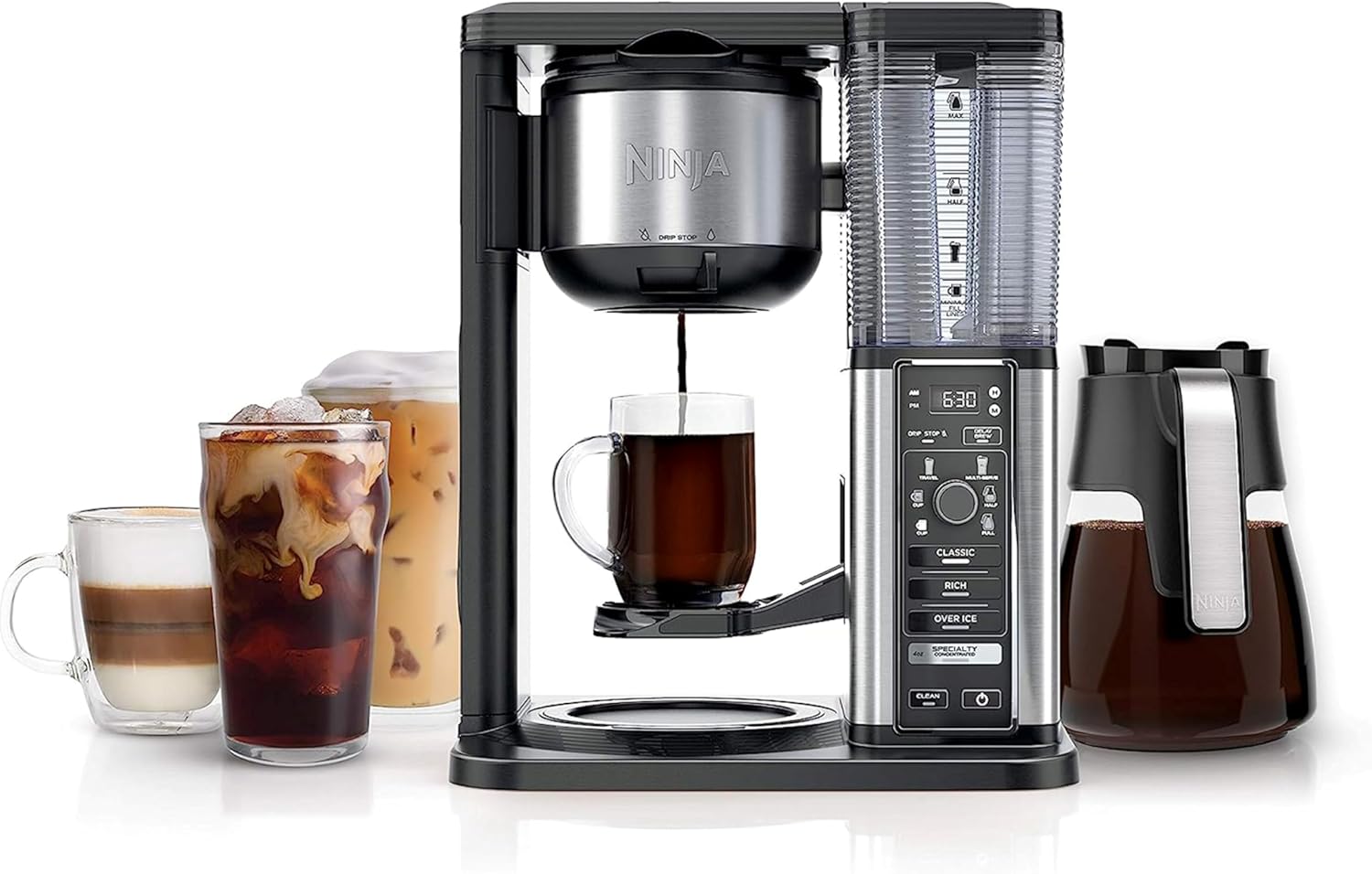

Coffee stains usually come off a carafe with warm water, a small amount of dish soap, and a soft bottle brush. For a brown film that remains after washing, use a paste made from baking soda and water, let it sit briefly, then scrub gently and rinse thoroughly. Always follow the care instructions for your specific carafe, especially if it is insulated, coated, or not dishwasher-safe.
Choose the Cleaning Method by Carafe Material
The safest cleaner depends on the material and construction. A plain glass carafe can usually be washed with warm soapy water and a non-scratch brush. Stainless-steel thermal carafes often need soaking because the narrow opening makes the interior hard to reach. Plastic lids, gaskets, painted markings, vacuum seals, and nonstick coatings may have model-specific restrictions.
| Carafe type | Start with | Avoid unless the manual permits it |
|---|---|---|
| Plain glass | Warm water, dish soap, soft brush | Abrasive pads and sudden temperature changes |
| Stainless-steel thermal | Warm soapy soak, soft bottle brush | Chlorine bleach, steel wool, immersing a sealed base |
| Plastic | Mild dish soap and a soft sponge | Very hot water, strong solvents, abrasive powders |
| Coated or decorated | Manufacturer-approved hand washing | Dishwasher cycles and scrubbing printed markings |
What You Need
- Warm water
- Mild, unscented dish soap
- A soft bottle brush, sponge, or microfiber cloth
- Baking soda for persistent brown residue
- A drying rack or clean towel
Do not use steel wool or a harsh scouring pad. Scratches make future residue harder to remove and can weaken a glass carafe. Never put your hand into a narrow glass carafe; use a long-handled brush instead.
How to Remove Fresh Coffee Stains
- Let a hot carafe cool enough to handle. Avoid moving it directly between very hot and very cold water.
- Empty the coffee and rinse away loose grounds.
- Add warm water and a few drops of dish soap.
- Clean the bottom, walls, spout, and the underside of the lid with a soft brush.
- Rinse several times until no foam or soap odor remains.
- Leave the carafe open to air-dry completely.
This is the best first step because coffee residue contains oils as well as colored compounds. Dish soap helps lift the oily film without relying on unnecessary abrasion.
How to Treat a Persistent Brown Film
If ordinary washing leaves a brown ring, mix baking soda with a little water to make a loose paste. Apply it with a soft brush, wait about 10 to 15 minutes, then scrub lightly. Add more water rather than more pressure. Rinse thoroughly and repeat once if necessary.
For a narrow thermal carafe, a warm soak may work better than direct scrubbing. Use only the amount of baking soda needed to loosen the film, keep the lid off during the soak, and rinse until the water runs clear. If the manufacturer sells cleaning tablets or specifies a particular cleaner, that instruction takes priority.
Should You Mix Baking Soda and Vinegar?
It is usually unnecessary. Baking soda is alkaline and vinegar is acidic, so combining them creates fizz but also neutralizes much of each ingredient. The bubbling may loosen debris mechanically, but it is not automatically a stronger cleaner. Use dish soap for oily coffee residue, baking soda and water for gentle scrubbing, or a manufacturer-approved descaler for mineral scale.
Mineral scale and coffee stains are different problems. A chalky white deposit is more likely to be mineral scale, while a brown, slightly oily film is coffee residue. Treating the correct problem avoids repeated cleaning and unnecessary wear.
Cleaning the Lid, Spout, and Gasket
Residue often hides in the lid rather than the carafe body. Remove detachable lid parts only if the manual shows that they are designed to come apart. Wash accessible channels with warm soapy water and a small soft brush. Rinse moving valves while operating them so trapped coffee can escape.
Inspect gaskets for cracks, swelling, or a persistent odor. Replace a damaged gasket with the correct model-specific part. Do not pry open a sealed thermal wall or attempt to repair a cracked glass vessel.
Common Cleaning Mistakes
- Using sudden temperature changes: thermal shock can crack glass.
- Scrubbing harder instead of soaking: aggressive abrasion can scratch glass, plastic, and stainless steel.
- Assuming every carafe is dishwasher-safe: heat can damage coatings, seals, handles, or printed measurement marks.
- Mixing several cleaners: never combine chlorine bleach with acids or other household cleaners.
- Ignoring the lid: trapped residue can keep producing stale odors even after the vessel looks clean.
- Closing the lid while damp: trapped moisture encourages odor and residue buildup.
How to Prevent Coffee Stains
Empty leftover coffee instead of letting it sit for hours. Rinse the carafe soon after use, wash it daily when it is used daily, and let all parts dry before reassembly. A deeper clean is needed when you see a film, notice stale flavor, or detect an odor; there is no benefit to following an arbitrary weekly schedule if the carafe is already clean.
Descale the brewer separately according to its manual. Descaling cleans the internal water path and mineral deposits; washing the carafe removes coffee oils and visible residue. One process does not replace the other.
When to Replace the Carafe
Replace a glass carafe with a crack, chip, loose handle, or damaged rim. Stop using a thermal carafe if its lining is damaged, it leaks between walls, or its lid no longer seals safely. Cosmetic staining alone does not always require replacement, but damage that affects hygiene, pouring, or structural safety does.
Frequently Asked Questions
Can I put my coffee carafe in the dishwasher?
Only if the manufacturer identifies that exact carafe and its removable parts as dishwasher-safe. When the instructions are unavailable, hand washing is the lower-risk choice.
Is baking soda safe for a glass carafe?
A wet baking-soda paste used with a soft brush is generally a mild option, but avoid forceful dry scrubbing. Stop if the carafe has a special coating or decoration and consult its care instructions.
Why does my clean carafe still smell stale?
Check the lid, valve, gasket, and spout. Coffee oils can remain in small channels that a normal rinse does not reach. Wash removable parts and let them dry separately.
Can I use bleach?
Do not use it unless the manufacturer explicitly permits it and provides dilution and rinsing instructions. Never mix bleach with vinegar, descaler, ammonia, or another cleaner.
What removes a white ring inside the carafe?
A white or chalky ring is likely mineral scale rather than a coffee stain. Follow the carafe manufacturer’s method for mineral deposits instead of scrubbing it as an oily stain.