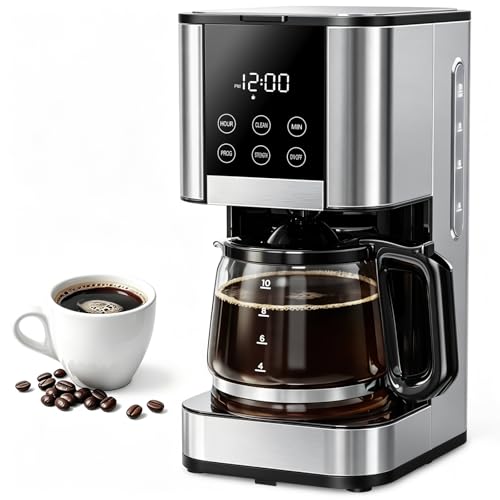

Coffee can stay on a warming plate for hours, but it usually tastes best soon after brewing. There is no single time limit for every brewer because plate temperature, carafe design, and personal taste differ.
For better flavor, pour coffee into an insulated carafe instead of leaving it on heat. For equipment choices and brewing basics, browse our drip coffee maker guides.
How Long Can Coffee Stay on a Warming Plate?
For flavor, treat the first 30 minutes as a practical target, not a guaranteed cutoff. Coffee may remain drinkable longer, but continued heat tends to flatten aroma and make bitterness or stale notes more noticeable.
A warming plate heats coffee from below, often in a glass carafe. That steady heat slows cooling, yet it does not preserve fresh-brewed flavor like an insulated server that retains heat without continuous heating.
Flavor changes with time and heat
After brewing, coffee releases aromatic compounds as it sits. Continued heating can speed flavor deterioration, so coffee left on a hot plate may taste harsher or less aromatic than a fresh pour.
These changes do not happen at one exact minute for every pot. Plate settings, the amount of coffee, carafe material, and your sensitivity to flavor all affect when quality becomes disappointing.
Heat setting and carafe type matter
Some brewers offer adjustable warming temperatures or automatic shutoff; others use a fixed setting. Check your model’s manual for operating limits rather than assuming every plate holds coffee at the same temperature.
A glass carafe typically sits directly on the plate, while a thermal carafe relies on insulation. Thermal models avoid continuous direct heating, though coffee can still cool as heat escapes whenever the lid opens or coffee is poured.
Quality and food safety are different questions
Black coffee losing flavor does not mean it becomes unsafe at the same moment. A warming plate’s presence alone cannot confirm safe holding temperature, so follow your brewer instructions and avoid treating the plate as a food-safety guarantee.
Coffee with milk, cream, or another perishable ingredient needs more caution. USDA guidance says perishable food should not remain at room temperature for more than two hours, or one hour above 90°F; do not rely on an unverified plate temperature to extend that window.
Batch size affects how long coffee stays appealing
A large pot can sit while you drink several cups, increasing the time the remaining coffee spends on heat. Brewing a smaller batch may reduce waste and keep each serving closer to its fresh flavor.
Match brewer capacity to your usual routine, not an occasional gathering. Our guide to compact five-cup coffee makers can help if a full-size pot often leaves coffee waiting.
Choose a storage method that fits your routine
If you expect to drink the pot soon, use the plate according to the maker’s instructions and pour a cup promptly. If coffee must wait, transfer it to a preheated, insulated carafe to reduce ongoing heat exposure.
Do not pour coffee into a sealed container unless it is designed for hot liquids and pressure release. Keep the lid secure, handle hot vessels carefully, and clean the carafe regularly to prevent old coffee residue from affecting later pots.
Use auto shutoff and cleaning features wisely
Automatic shutoff can limit how long a plate stays on, but the setting varies by model. Confirm the timer in the manual, and do not assume a shutoff feature means coffee remains flavorful until it activates.
Wipe spills after the plate cools and clean the carafe as directed. Mineral scale inside a brewer is a separate maintenance issue; follow the manufacturer’s descaling instructions rather than using an unapproved cleaner.
Why You Should Trust Us
This guide separates flavor quality from food safety and avoids assigning one universal holding time to every coffee maker. The product data supplied for this page includes no models or specifications, so we do not claim product testing or make model-specific recommendations.
Use your brewer manual for plate settings, shutoff behavior, and cleaning directions. Our practical guidance focuses on the tradeoff between convenience and flavor, while food-safety advice for perishable additions follows USDA time limits.
Final Thoughts
Coffee may remain on a warming plate beyond 30 minutes, but flavor often becomes less appealing as heating continues. For the best balance, drink it soon after brewing or move the remaining coffee to an insulated carafe.
No products were provided for comparison, so there is no defensible best-overall, value, or specific-use pick here. Choose a brewer with capacity and shutoff behavior suited to your routine, and compare options in our coffee maker category.
FAQs
How long can coffee stay on a warming plate before flavor changes?
There is no exact cutoff, but flavor often declines with continued heating. Treat about 30 minutes as a practical quality target, then rely on your taste and brewer instructions.
Is coffee left on a warming plate for two hours safe to drink?
Black coffee and coffee containing dairy raise different food-safety concerns. A warming plate does not prove safe holding temperature; discard perishable coffee that has exceeded USDA time limits.
Does a warming plate make coffee taste burnt?
It can contribute to harsher or less fresh-tasting coffee because the brew continues receiving heat. The result depends on plate temperature, time, and individual preference.
Is a thermal carafe better than a warming plate?
A thermal carafe avoids continuously heating coffee from below, which may help preserve flavor. It can still lose heat over time, especially when opened frequently.
Can I leave coffee on the warming plate overnight?
No. Overnight heating can produce poor-tasting coffee and may conflict with your brewer’s operating instructions. Use the automatic shutoff if available, and never leave an appliance running contrary to its manual.
Can I reheat coffee after it cools?
You can reheat plain coffee, but reheating does not restore aromas lost during storage and heating. For better flavor, brew a smaller amount or store coffee in an insulated carafe.
Can coffee with milk stay on a warming plate?
Do not assume the plate keeps milk-containing coffee at a safe temperature. Follow USDA time limits for perishable food, and refrigerate or discard it as appropriate.
How can I keep coffee warm without a warming plate?
Pour it into a clean, preheated insulated carafe designed for hot liquids, then keep the lid closed. For less leftover coffee, consider drip coffee makers for different household needs and choose capacity around your normal servings.