
A moka pot suits coffee drinkers who want a strong, concentrated cup without learning espresso extraction or maintaining complex equipment. This moka pot vs espresso machine guide compares 4 accessible brewers for 2026 and explains where each format excels.
The central choice is not simply manual versus electric, because two featured moka pots include their own powered bases. Readers wanting higher pressure, adjustable extraction, and milk-drink capability should also explore our espresso coffee machine.

Pros
- Fast 5-minute brew time
- No stovetop needed
- Auto shut-off for safety
- Transparent brewing view
- Portable and detachable
Cons
- Plastic upper may feel less premium
- Cable slightly short
- Not for standard coffee mugs
Specifications
| Other Special Features of the Product | Auto Shut-Off, Detachable Base, Permanent Filter, Portable |
|---|---|
| Coffee Maker Type | Espresso Machine |
| Specific Uses For Product | Cappuccino, Espresso, Latte, Mocha |
| Recommended Uses For Product | Backpacking, Camping, Hiking, Traveling |
| Operation Mode | Semi-Automatic |
| Wattage | 480 watts |
| Voltage | 120 volts |
| Human Interface Input | Buttons |
| Coffee Input Type | Ground |
| Power Source | Electric |
Verify the current product variation before purchase; specifications may change.
Detailed Review
What stands out in the currently available product data:
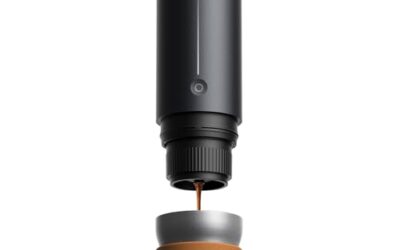
- Brews 6 servings (300ml) of rich, aromatic espresso in just 5 minutes without a stove
- Transparent top lets you watch the brewing process for perfect extraction every time
- Auto shut-off when pot leaves base or reaches boiling point for worry-free operation
- BPA-free plastic upper and food-grade aluminum lower ensure safe, durable construction
- Detachable base and permanent filter make it portable and easy to clean for camping or travel
- No complicated setup: just fill water, add grounds, and press a button for authentic coffee
Best For / Avoid If
Best for buyers prioritizing
- Fast 5-minute brew time
- No stovetop needed
- Auto shut-off for safety
Consider another option if
- Plastic upper may feel less premium
- Cable slightly short
- Not for standard coffee mugs

Pros
- Quick brewing time
- Easy to use and clean
- Compact counter footprint
- Great crema from ground coffee
- Affordable for daily espresso
Cons
- Heating element may wear over time
- Manual operation not fully automatic
- Limited to small cup sizes
Specifications
| Other Special Features of the Product | Detachable Base |
|---|---|
| Coffee Maker Type | Espresso Machine |
| Specific Uses For Product | Espresso |
| Recommended Uses For Product | making espresso, Cuban coffee preparation, Italian coffee preparation, Moka brewing, everyday use, entertaining guests, travel, office use |
| Operation Mode | Manual |
| Wattage | 230 watts |
| Voltage | 230 volts_of_alternating_current |
| Human Interface Input | Buttons |
| Coffee Input Type | ground |
| Power Source | electric |
Verify the current product variation before purchase; specifications may change.
Detailed Review
What stands out in the currently available product data:
- Brews 3 or 6 cups of rich espresso with a reusable filter for easy customization
- Detachable cool-touch base and handle make pouring safe and convenient, even when hot
- Cast aluminum body is durable and keeps a modern, compact footprint on your counter
- Simple one-button operation with a visual brewing indicator for effortless control
- Versatile for making traditional espresso, Cuban coffee, Italian coffee, or moka-style drinks
- Lightweight at 2.8 pounds, easy to pack for travel or take to the office
Best For / Avoid If
Best for buyers prioritizing
- Quick brewing time
- Easy to use and clean
- Compact counter footprint
Consider another option if
- Heating element may wear over time
- Manual operation not fully automatic
- Limited to small cup sizes

Pros
- Affordable and lightweight
- Brews rich, espresso-like coffee
- Portable, no power needed
- Easy to use and clean
- Durable aluminum construction
Cons
- Can leak if not screwed tightly
- Requires care with alkaline substances
- Brewing time needs attention to avoid burning
Specifications
| Other Special Features of the Product | Portable |
|---|---|
| Coffee Maker Type | Moka Pot |
| Specific Uses For Product | Cappuccino, Latte, Mocha |
| Recommended Uses For Product | making coffee |
| Operation Mode | Manual |
| Human Interface Input | Buttons |
| Coffee Input Type | ground |
| Power Source | manual |
| Filter Type | Reusable |
| Capacity | 10 ounces |
Verify the current product variation before purchase; specifications may change.
Detailed Review
What stands out in the currently available product data:
- Brews 6 cups of strong, velvety espresso with steam pressure up to 3 atmospheres
- Durable food-grade aluminum body with classic Italian design for even heat
- Built-in safety valve regulates pressure for consistent extraction and safety
- U-shaped spout allows smooth, continuous pouring without drips
- Threaded base ensures stable contact on any stovetop, reducing tipping
- Lightweight and portable, no electricity needed for use anywhere
Best For / Avoid If
Best for buyers prioritizing
- Affordable and lightweight
- Brews rich, espresso-like coffee
- Portable, no power needed
Consider another option if
- Can leak if not screwed tightly
- Requires care with alkaline substances
- Brewing time needs attention to avoid burning

Pros
- Affordable alternative to electric espresso machines
- Durable cast aluminum construction
- Even heat distribution for consistent brew
- Portable for stovetops and camping
- Easy to clean and maintain
Cons
- Small spout requires slow pouring to avoid drips
- Handle can get warm if placed too close to burner
- Manual operation needs practice to dial in
Specifications
| Other Special Features of the Product | Portable |
|---|---|
| Coffee Maker Type | Moka Pot |
| Specific Uses For Product | Coffee, Cuban Coffee, Espresso, Italian Coffee, Latte |
| Recommended Uses For Product | Espresso, Americano, Cuban coffee, Italian-style coffee, Lattes, Cappuccinos |
| Operation Mode | Manual |
| Human Interface Input | Buttons |
| Coffee Input Type | ground_coffee |
| Power Source | Manual |
| Filter Type | Reusable |
| Capacity | 6 cups |
Verify the current product variation before purchase; specifications may change.
Detailed Review
What stands out in the currently available product data:
- Brews 6 servings of rich espresso-style coffee in minutes
- Cast aluminum body ensures even heat distribution for better flavor
- Safety-release valve controls pressure for consistent extraction
- Works on gas, electric, ceramic, and propane stovetops
- Compact and portable design fits small kitchens and camping trips
- Easy to clean with just a rinse and dry
Best For / Avoid If
Best for buyers prioritizing
- Affordable alternative to electric espresso machines
- Durable cast aluminum construction
- Even heat distribution for consistent brew
Consider another option if
- Small spout requires slow pouring to avoid drips
- Handle can get warm if placed too close to burner
- Manual operation needs practice to dial in
Pressure, Extraction, and Cup Character
A moka pot uses steam pressure to move hot water upward through ground coffee, producing a concentrated and full-bodied drink. It does not reach the controlled brewing pressure associated with a conventional espresso machine, so the resulting cup is not technically espresso.
Choose a moka pot when you enjoy bold coffee for sipping, Cuban-style preparations, or dilution with hot water and milk. Choose an espresso machine when crema, shot timing, dose adjustment, and repeatable espresso extraction are essential to your routine.
Control and Learning Curve
Moka brewing gives you useful control over coffee freshness, grind size, water level, heat, and removal timing. However, it offers no direct pressure adjustment, and excessive heat can produce harsh flavors before you recognize the problem.
Espresso machines provide more extraction variables, but that flexibility demands greater skill and usually a capable burr grinder. Beginners should expect to learn dosing, distribution, tamping, shot timing, and grinder adjustment before achieving consistent results.
| Decision factor | Moka pot | Espresso machine |
|---|---|---|
| Beverage | Concentrated moka coffee | True espresso when properly configured |
| Primary controls | Grind, dose, water, and heat | Grind, dose, yield, time, and sometimes temperature |
| Milk preparation | Separate frother needed | May include a steam wand |
| Learning curve | Moderate | Moderate to substantial |
Stovetop Versus Powered Brewing
Traditional moka pots require a compatible burner and active heat management, while electric versions use a dedicated powered base. The LAOION and IMUSA models remove stove compatibility from the equation and can suit offices or small spaces.
The Primula and Mongdio models are simpler stovetop designs that remain useful during travel where a suitable burner is available. Primula documents compatibility with electric, ceramic, gas, and propane stovetops, but neither supplied listing confirms induction compatibility.
Serving Capacity and Drink Size
Moka pot cup ratings refer to small demitasse servings rather than standard American mugs, creating frequent capacity misunderstandings. LAOION lists a 300 ml capacity, while IMUSA describes each of its small servings as approximately 1.5 ounces.
Estimate your required output from the finished drink rather than the cup label printed on the brewer. If you routinely prepare several large milk drinks, an espresso machine with a larger reservoir may reduce repeated filling and brewing.
Milk Drinks and Beverage Flexibility
A moka pot can make a strong coffee base for homemade lattes, cappuccinos, and Americanos, but it cannot steam milk. You will need a separate frother, whisk, or steam appliance, adding another step and item to clean.
An espresso machine with a steam wand integrates extraction and milk texturing, which matters for frequent cappuccino or latte preparation. Compare those options in our latte machine guide, especially if microfoam matters more than compact storage.
Cleaning, Safety, and Long-Term Ownership
Moka pots require rinsing, thorough drying, gasket inspection, and a clear safety valve to operate as intended. Never tamp the grounds or fill water above the valve, because either mistake can interfere with proper pressure management.
Electric moka pots add switches, heating components, and detachable bases that should remain dry according to their care instructions. Espresso machines demand additional backflushing, descaling, group cleaning, and steam-wand purging, with exact requirements varying by design.
Aluminum moka pots should be cleaned according to manufacturer directions rather than automatically placed in a dishwasher. Mongdio explicitly advises hand rinsing and drying, while Primula likewise directs users to rinse components with warm water.
Grinder and Total Setup Requirements
Moka pots are relatively forgiving, but they still benefit from evenly ground coffee finer than typical drip coffee. Grounds should be distributed level without tamping, since compacting the basket can restrict flow and increase unwanted pressure.
Espresso requires a grinder capable of fine, incremental adjustment, which can materially increase the setup cost and counter footprint. Browse the coffee grinder guides before choosing a machine that depends on precise dialing in.
Why You Should Trust Us
Our assessment uses the supplied manufacturer specifications, documented materials, capacities, safety features, cleaning directions, and brewing formats. We did not physically test these products, so we avoid unsupported claims about flavor, speed, noise, reliability, or temperature consistency.
We prioritize differences that affect daily ownership, including stove requirements, serving interpretation, extraction control, milk preparation, and maintenance. Ratings can provide context, but they do not replace compatibility checks or the manufacturer instructions supplied with your brewer.
Final Thoughts
Our best overall moka option is the LAOION Cuban Coffee Maker for readers wanting powered brewing, visible progress, and automatic shutoff features. Its transparent upper chamber improves monitoring, although its plastic top and electrical components introduce different ownership considerations than an all-manual pot.
The Mongdio Stovetop Espresso Maker Moka Pot is our value choice for straightforward stovetop brewing and simple hand cleaning. The IMUSA 6 or 3 Cup Electric Espresso Maker is the specific-use pick for offices, entertaining, or kitchens where adjustable small-batch capacity matters.
Choose neither format if you expect authentic espresso pressure, integrated milk steaming, and extensive shot control from these moka brewers. A broader espresso machine comparison will better serve that goal, though it generally involves more equipment, maintenance, and technique.
Frequently Asked Questions
What is the main moka pot vs espresso machine difference in 2026?
A moka pot pushes heated water through coffee using steam pressure, creating a strong and concentrated beverage. An espresso machine uses substantially greater controlled pressure to produce true espresso with a different texture and extraction profile.
Does a moka pot make real espresso?
No, a moka pot does not produce espresso by the technical brewing definition used for espresso machines. It makes concentrated moka coffee that can still work well in milk drinks and Cuban-style preparations.
Is a moka pot easier to use than an espresso machine?
A moka pot has fewer variables and components, making its basic workflow easier for many beginners. You must still manage grind, water level, heat, assembly, and removal timing to prevent weak or bitter coffee.
Can I use espresso-ground coffee in a moka pot?
Some espresso grinds may be too fine and restrictive for a moka pot, depending on the grinder and coffee. Start slightly coarser than espresso, fill the basket evenly, and never tamp the grounds.
Are aluminum moka pots safe to use?
Use an undamaged brewer exactly as its manufacturer directs, keeping the safety valve unobstructed and replacing worn seals. Anyone with material-specific health concerns should seek appropriate professional guidance before selecting cookware or brewing equipment.
Can a moka pot go in the dishwasher?
Do not assume an aluminum moka pot is dishwasher safe, because detergent and heat can affect its finish. The supplied Mongdio and Primula directions call for warm-water rinsing followed by thorough drying before reassembly.
Should I buy an electric or stovetop moka pot?
Choose electric when you want a dedicated heat source, simple switching, and greater flexibility away from a kitchen stove. Choose stovetop when you prioritize mechanical simplicity, portability, and compatibility with an already available burner.
Which option is better for lattes and cappuccinos?
An espresso machine with a steam wand is generally better suited to frequent milk drinks and textured microfoam. A moka pot remains workable when paired with a separate device from our milk frother guides.