
Choosing an automatic vs semi automatic espresso machine affects how much control, equipment, and practice your morning coffee requires. Our 2026 comparison examines 2 options while clarifying an important limitation: neither featured model is fully automatic.
The main decision is therefore between an integrated grinder workflow and a compact, lower cost machine requiring separate ground coffee. For broader choices that automate grinding and brewing, visit our automatic espresso machine guide.

Pros
- Built-in grinder saves counter space
- PID temperature control for consistency
- Steam wand for microfoam
- Durable stainless steel construction
- Includes essential accessories
Cons
- Manual operation requires practice
- 1/2 lb bean hopper is small
- 1 year warranty is limited
Specifications
| Other Special Features of the Product | Manual |
|---|---|
| Coffee Maker Type | Espresso Machine |
| Specific Uses For Product | Espresso |
| Operation Mode | Manual |
| Wattage | 1600 watts |
| Voltage | 120 |
| Human Interface Input | Dial |
| Coffee Input Type | whole_beans |
| Power Source | AC adapter |
| Filter Type | Reusable |
Verify the current product variation before purchase; specifications may change.
Detailed Review
What stands out in the currently available product data:
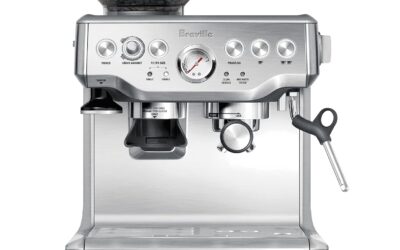
- Integrated conical burr grinder with 16 precision settings for fresh, dose-controlled grinding
- Low pressure pre-infusion gradually increases pressure for balanced flavor extraction
- PID digital temperature control ensures water is at the optimal temperature for espresso
- Powerful steam wand enables manual microfoam texturing for latte art
- Includes dual and single wall filter baskets for use with fresh or pre-ground coffee
- Thermocoil heating system delivers stable water temperature for consistent brews
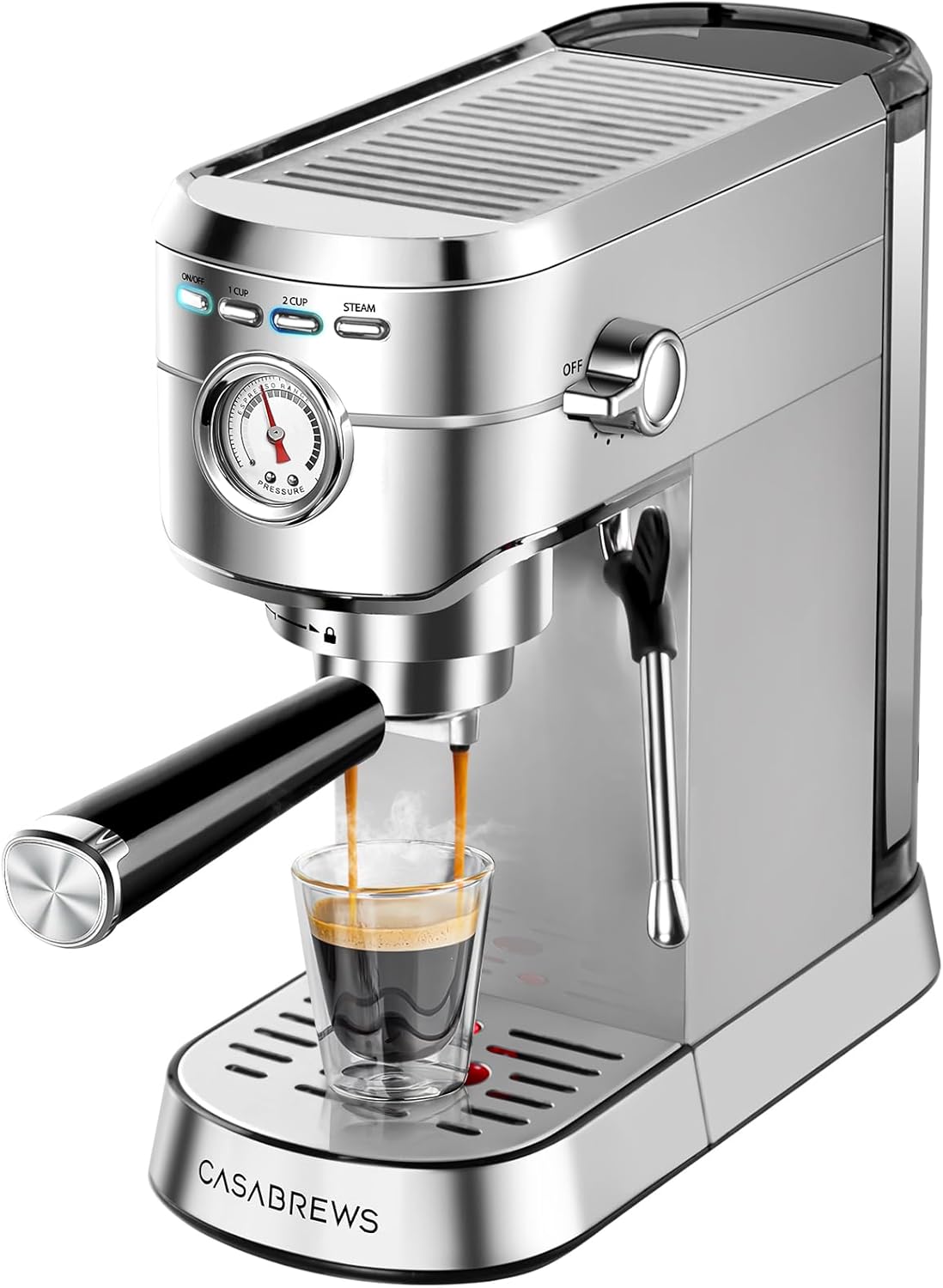
Pros
- Narrow countertop footprint
- Built-in pressure gauge
- Manual milk frothing control
- Removable water tank
- One-year warranty
Cons
- Manual milk texturing required
- Cooldown required after steaming
- Small water reservoir for heavy use
Specifications
| Coffee Maker Type | Espresso Machine |
|---|---|
| Operation Mode | Semi-Automatic |
| Wattage | 1350 watts |
| Voltage | 120 volts_of_alternating_current |
| Human Interface Input | Buttons |
| Output Pressure | 20 bar |
| Coffee Input Type | ground_coffee |
| Power Source | AC |
| Filter Type | Reusable |
| Capacity | 2.1 pounds |
Verify the current product variation before purchase; specifications may change.
Detailed Review
What stands out in the currently available product data:
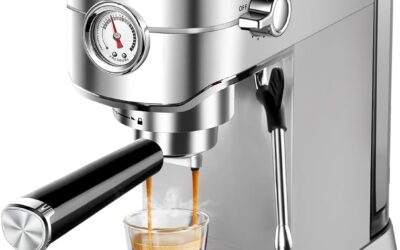
- Slim 5.47-inch width conserves valuable counter space
- Pressure gauge helps monitor brewing pressure while dialing in shots
- 20-bar pump and 1350-watt boiler support espresso preparation
- Manual steam wand lets you texture milk for lattes and cappuccinos
- Removable 34-ounce tank simplifies refilling and routine maintenance
- Single- and double-shot filters support different serving sizes
Best For / Avoid If
Best for buyers prioritizing
- Narrow countertop footprint
- Built-in pressure gauge
- Manual milk frothing control
Consider another option if
- Manual milk texturing required
- Cooldown required after steaming
- Small water reservoir for heavy use
Automation Level and Daily Workflow
A true automatic espresso machine generally controls the brewing volume after you start extraction, while a super automatic model also grinds and doses beans. Semi automatic machines still require you to prepare the coffee puck, attach the portafilter, and steam milk separately.
The Breville combines a grinder, dosing controls, brewing group, and steam wand within one appliance, reducing movement between separate tools. The CASABREWS omits the grinder, making it more dependent on preground coffee or a capable standalone espresso grinder.
Grinder Requirements and Extraction Control
Espresso needs a fine, consistent grind because small particle changes can noticeably alter flow rate and extraction time. The Breville includes a conical burr grinder with adjustable grind amount and manual override, offering more control from whole bean to cup.
The CASABREWS can be economical if you already own an espresso capable grinder or prefer conveniently packaged ground coffee. However, adding a suitable grinder changes its total cost, counter footprint, noise level, and number of steps required each morning.
A practical setup budget should include the machine, grinder, replacement water treatment, cleaning supplies, and any preferred accessories. Our coffee grinder guides can help if you choose a machine without integrated grinding.
Water Capacity and Household Volume
The Breville has a documented 67 ounce water tank and half pound bean hopper, supporting fewer refilling interruptions. The CASABREWS lists a removable 34 ounce tank, which suits smaller kitchens but requires more frequent attention in busy households.
Remember that steam production and flushing also consume water, so tank capacity never translates directly into an equal beverage volume. Couples making several milk drinks should prioritize capacity more heavily than someone preparing one espresso before work.
| Decision factor | Breville Barista Express | CASABREWS CM5418 |
|---|---|---|
| Grinder | Integrated conical burr grinder | No grinder listed |
| Water tank | 67 ounces | 34 ounces |
| Milk system | Manual steam wand | Manual steam wand |
| Included filters | Single and dual wall baskets | One cup and two cup filters |
| Best workflow fit | Whole bean preparation in one station | Compact setup with separate grounds |
Milk Steaming and Drink Sequencing
Both machines use manual steam wands, so neither delivers one touch cappuccinos or lattes from an integrated milk container. You must position the pitcher, introduce air carefully, create a whirlpool, and stop before overheating the milk.
CASABREWS specifically instructs users not to brew immediately after frothing because the machine must cool before extraction. That transition matters when serving several drinks, since poor sequencing can slow preparation and trigger the documented overheating protection mode.
For easier pitcher sizing and pouring control, our milk pitcher guide for latte art covers another important part of the workflow. A pitcher does not automate steaming, but appropriate capacity makes milk movement easier to observe.
Counter Space and Setup Complexity
The CASABREWS is described by its manufacturer as compact, making it attractive where appliance width and visual clutter matter. Its smaller body does not represent the entire setup if you add a grinder, scale, knock box, and milk pitcher.
The Breville consolidates grinding, dosing, and brewing, but its integrated design commits more counter space to one substantial appliance. Measure width, depth, overhead cabinet clearance, and portafilter movement before deciding which layout genuinely fits your kitchen.
Cleaning, Maintenance, and Ownership Cost
Both machines require prompt wand wiping, steam purging, basket rinsing, and regular cleaning according to their instructions. Mineral buildup can affect water flow and heating, so local water hardness should inform descaling frequency and filtration choices.
The Breville includes cleaning tablets, a cleaning disc, brush tool, water filter, and filter holder in the supplied package. Its integrated grinder adds another component to maintain, while the CASABREWS separates grinder maintenance from the espresso machine itself.
Budget, Learning Curve, and Long Term Fit
The CASABREWS targets buyers seeking a simpler entry point, particularly when acceptable ground coffee is already available. The Breville asks for a larger commitment but provides grind adjustment and whole bean preparation without purchasing another major appliance.
Choose based on the workflow you will tolerate after the novelty fades, rather than the longest feature list. Neither option fits someone wanting coffee without dosing, tamping, portafilter handling, manual steaming, or routine cleanup.
Why You Should Trust Us
We based this comparison on the supplied manufacturer specifications, included accessories, capacities, controls, and documented operating guidance. We did not conduct hands on testing, so we avoid unsupported conclusions about taste, temperature stability, noise, or long term durability.
Our recommendations emphasize workflow differences that affect ownership, including grinder needs, refilling frequency, milk sequencing, maintenance, and expansion costs. Manufacturer performance language is treated as a claim rather than independent evidence of extraction quality or cafe equivalent results.
Final Thoughts
Our best overall choice is the Breville BES870XL Barista Express Espresso for buyers wanting whole bean preparation within one coordinated station. Its integrated burr grinder, larger documented tank, dosing adjustment, and included maintenance accessories create the more complete home espresso workflow.
The CASABREWS CM5418 Compact Espresso Machine is our best value choice for occasional drinks, limited counters, or households already equipped with suitable coffee grounds. It remains hands on, and milk steaming must be followed by the manufacturer’s required cooling procedure before brewing.
For aspiring home baristas, the Breville BES870XL Barista Express Espresso is also the stronger specific use pick because grind changes support deliberate dialing in. Buyers prioritizing push button convenience should skip both and compare super automatic machines for small kitchens instead.
Frequently Asked Questions
What is the main automatic vs semi automatic espresso machine difference?
Automatic machines typically stop the programmed shot volume themselves, while semi automatic machines leave more brewing control to the user. Super automatic machines extend automation by handling grinding, dosing, brewing, and sometimes milk preparation.
Which automatic vs semi automatic espresso machine is preferable in 2026?
The preferable type depends on whether you value convenience or direct control over puck preparation and milk texture. Neither featured product is fully automatic, although the Breville integrates grinding to streamline several preparation steps.
Does the Breville Barista Express make espresso automatically?
It integrates grinding and offers single or double shot controls, but users still dose, tamp, lock the portafilter, and steam milk. It should not be confused with a bean to cup super automatic machine.
Does the CASABREWS CM5418 include a coffee grinder?
No integrated grinder appears in the supplied product specifications, so you need appropriately ground coffee from another source. A separate grinder improves adjustment flexibility but adds expense, noise, maintenance, and counter space.
Can these espresso machines make lattes and cappuccinos?
Both include manual steam wands for texturing milk used in lattes, cappuccinos, and similar espresso drinks. Results depend on fresh ingredients, steaming technique, pitcher control, and properly prepared espresso rather than the wand alone.
Why must the CASABREWS cool after steaming?
The manufacturer warns that brewing immediately after frothing can leave internal temperature and pressure too high for extraction. Its instructions describe a cooling procedure when the cup selection lights flash and overheating protection activates.
Is a pressure gauge enough to guarantee good espresso?
No, a gauge provides process feedback but cannot guarantee flavor, balanced extraction, or suitable beverage temperature. Grind consistency, dose, puck preparation, coffee freshness, water quality, and extraction timing all influence the cup.
What accessories are useful for a semi automatic espresso setup?
A capable grinder, accurate scale, milk pitcher, cleaning brush, and knock box can improve consistency and organization. Our espresso brewing scale guide explains how weighing coffee and beverage output supports repeatable adjustments.