
Taking a sip of espresso only to be greeted by a sharp, puckering sensation can ruin your morning coffee routine. Understanding why does espresso taste sour in 2026 comes down to the fundamental physics of coffee extraction and water flow.
Most home baristas encounter sourness when water flows too fast or pulls flavors unevenly through the coffee bed. Upgrading your dial-in routine or choosing capable equipment from our espresso machines category can quickly bring sweetness back to your cup.
Grind Size and Particle Uniformity
Coarse grounds allow pressurized water to rush past coffee particles without dissolving enough caramelized sugars. When extraction finishes too rapidly, you taste only the readily soluble organic acids that exit the bean first.
Moving your grinder finer restricts water flow and extends contact time, allowing richer flavors to develop. If you calibrate your setup using a manual grinder like the Comandante C40 review details, small step adjustments make dialing in much easier.
Inconsistent grinders produce excessive boulders and fines, leading to muddy shots that taste both sharp and astringent. Investing in uniform burrs ensures every particle extracts at an identical rate during the brewing cycle.
Water Temperature and Thermal Stability
Brewing espresso requires water heated strictly between 195 and 205 degrees Fahrenheit to properly dissolve complex coffee solids. Water that falls below this range fails to extract heavier sweet compounds, resulting in a thin, sour beverage.
Compact home boilers often lose critical heat when cold water refills the heating chamber between consecutive pulls. Locking a cold portafilter into the group head absorbs heat and drops brewing temperatures immediately before extraction begins.
Flushing a blank hot water shot through the group head preheats your metal basket and stabilizes the entire system. Giving your machine ample warm-up time ensures consistent brewing heat from the first drop to the last.
Brew Ratio and Shot Yield
The relationship between your dry dose of ground coffee and liquid espresso yield governs total flavor balance. A standard modern double shot commonly starts with an 18-gram dose to produce approximately 36 grams of liquid espresso.
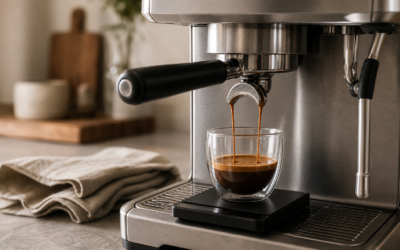
Stopping a shot too early yields a restricted pour packed with bright acids but void of balancing body. Using tools featured in our guide to the best digital coffee scale for espresso brewing lets you measure your output accurately in real time.
If a 1:2 ratio tastes too tangy, letting the shot run to a 1:2.5 ratio pulls more dissolved solids into the cup. That extra water extracts gentle bitterness and sweet notes that cut through harsh acidic overtones.
Puck Preparation and Channeling
Water under nine bars of pressure constantly searches for paths of least resistance through the compressed coffee puck. Clumps, uneven distribution, or an unlevel tamp create narrow pathways where water bursts through at high velocity.
The coffee directly touching the high-flow channels becomes hollow and over-extracted, while the surrounding dry clumps stay under-extracted. This paradoxical combination confuses your palate, presenting sharp sourness alongside an unpleasant, dry astringency on the tongue.
Stirring your grounds with thin needles using the Weiss Distribution Technique eliminates dense pockets before tamping. A level tamp with consistent downward pressure ensures smooth, even saturation across the entire surface of the basket.
Roast Profile and Bean Degassing
Light-roasted specialty beans retain higher natural malic and citric acidity compared to traditional dark Italian roasts. These delicate beans demand finer grind settings, higher water temperatures, and longer extraction times to reveal pleasant sweetness.
Brewing beans that were roasted yesterday traps carbon dioxide inside the puck, physically blocking water from contacting the coffee cells. This trapped gas forces turbulent water flow and premature flow rates that leave shots tasting tart and grass-like.
Allow whole beans to rest for seven to fourteen days after roasting to let excess carbon dioxide dissipate naturally. Switching to a balanced medium roast provides deeper chocolate and caramel notes that naturally mute aggressive acidity.
Pump Pressure and Flow Mechanics
Vibration pumps found in entry-level machines often ramp up to 15 bars of pressure without factory regulation. Excessive force crushes the coffee puck against the bottom basket holes, fracturing the bed and creating rapid bypass channeling.
Exploring streamlined equipment in our best compact espresso machine guide illustrates how controlled nine-bar flow delivers sweeter shots. Gentle pressure saturation prevents structural puck failure and preserves a balanced, syrupy extraction throughout the entire shot time.
| Brew Symptom | Probable Cause | Recommended Solution |
|---|---|---|
| Shot runs in under 20 seconds | Grind size is too coarse | Adjust grinder finer by small increments |
| Portafilter feels cool to touch | Cold group head and metal basket | Run a blank hot water cycle prior to brewing |
| Visible spurts from naked basket | Puck channeling and clumps | De-clump grounds with a distribution needle tool |
| Shot finishes short of target yield | Premature brew cutoff | Extend the extraction ratio from 1:2 to 1:2.5 |
Why You Should Trust Us
Our extraction troubleshooting guides draw directly from established beverage science, industry extraction dynamics, and standard calibration practices. We analyze mechanical pressure curves, thermal properties, and particle distribution patterns without relying on marketing exaggerations.
We believe in offering practical diagnostic workflows that do not require expensive equipment upgrades when basic technique adjustments solve the problem. Every recommendation focuses on clear cause-and-effect relationships to help you brew better coffee on your existing countertop setup.
Final Thoughts
Solving sour espresso requires changing only one variable at a time so you can accurately isolate the culprit. Adjusting your grind slightly finer and weighing your output yield usually corrects sharp flavors without touching other settings.
If your current machine suffers from inconsistent heating between shots, looking at side-by-side analysis like our DeLonghi dedica vs breville bambino comparison helps explain how modern thermo-blocks maintain heat. Steady brew temperatures and uniform puck preparation will consistently turn harsh sour notes into rich, balanced espresso.
FAQs
What is the primary reason why does espresso taste sour?
The primary culprit is under-extraction, which occurs when water passes through the coffee bed without dissolving enough sweet, caramelized solids. Grinding too coarse or brewing with cool water leaves only the fast-dissolving acidic compounds in your cup.
How do I tell the difference between sour and bitter espresso?
Sourness produces an immediate, sharp tang on the sides of your tongue, similar to biting into a fresh lemon wedge. Bitterness creates a harsh, drying sensation that lingers on the back of your throat, resembling dark cocoa or burnt toast.
Why does espresso taste sour even with a fine grind in 2026?
Grinding excessively fine can cause severe channeling, where high pressure cuts cracks through the puck. Water bypasses the dense coffee mass completely, resulting in an under-extracted, sour shot despite the fine setting.
Does low water temperature always cause sour espresso?
Yes, water below 195 degrees Fahrenheit lacks the thermal energy required to dissolve heavier sugar compounds. Running a warming shot through your portafilter before dosing ensures the brewing chamber maintains proper extraction temperature.
How does increasing shot yield eliminate sour taste?
Acids dissolve first, while sugars and balancing bitter compounds extract later during the shot cycle. Pulling a slightly longer ratio, such as 1:2.5 instead of 1:1.5, draws out more sweet solids to balance initial acidity.
Can coffee roast profile explain why does espresso taste sour?
Light roasts contain high levels of organic fruit acids that taste sharp if pulled with traditional extraction parameters. Switching to a medium or dark roast bean provides lower acidity and deeper chocolate notes that are easier to balance.
Will an entry level machine consistently pull sour shots?
Entry-level appliances can pull balanced espresso when given adequate preheating time and proper puck preparation. Upgrading to appliances highlighted in our Breville Bambino vs Bambino Plus breakdown provides faster thermal recovery for greater shot consistency.
How does tamping pressure affect sour flavors in espresso?
Tamping too lightly leaves gaps in the coffee bed that promote water channeling and weak extraction. Tamping firmly and levelly until the coffee stops compressing creates a uniform barrier that forces even water saturation.